Keeping an apple asleep
An apple picked in October is still alive. Controlled-atmosphere storage is the art of slowing that life down to almost nothing.
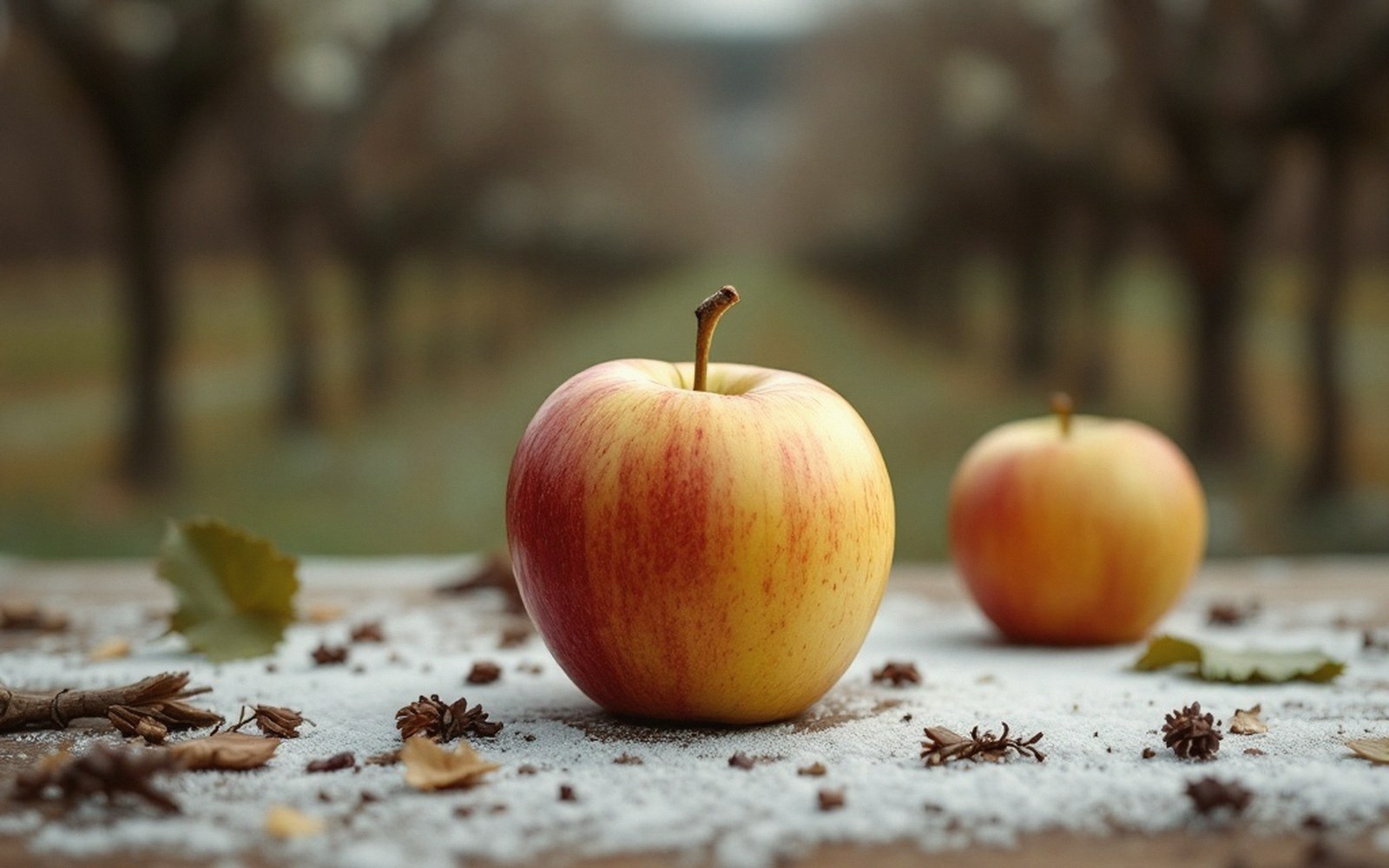
Lower the oxygen, raise the carbon dioxide, hold the temperature: respiration slows and the fruit waits.
The gas inside the room
An apple does not stop at harvest. It keeps respiring — consuming its own sugars, softening, ripening toward rot. Left at room temperature, a freshly picked dessert apple is past its best within weeks. The question the industry has spent the better part of a century answering is: how slowly can you make that happen?
The first lever is temperature. Cold slows every biochemical reaction, and most CA rooms run just above the variety's freeze point — typically somewhere between −1 °C and 4 °C depending on the cultivar. Gala and Fuji tolerate the low end of that range; some varieties are sensitive to chilling injury and must be held warmer, which costs them a little of the storage life they might otherwise have. Temperature alone, though, is only half the answer.
The second lever is atmosphere. Normal air is roughly 21 percent oxygen and 0.04 percent carbon dioxide. Inside a sealed CA room, operators lower the oxygen to somewhere in the range of 1–2 percent and raise the carbon dioxide to 1–5 percent, depending on the variety and the target storage duration. Oxygen is what drives respiration; reduce it enough and the fruit's metabolism slows dramatically. Elevated carbon dioxide suppresses the production of ethylene — the ripening hormone the fruit makes itself, the same compound that makes a ripe banana accelerate everything else in the bowl. Interrupt both, and the apple waits.
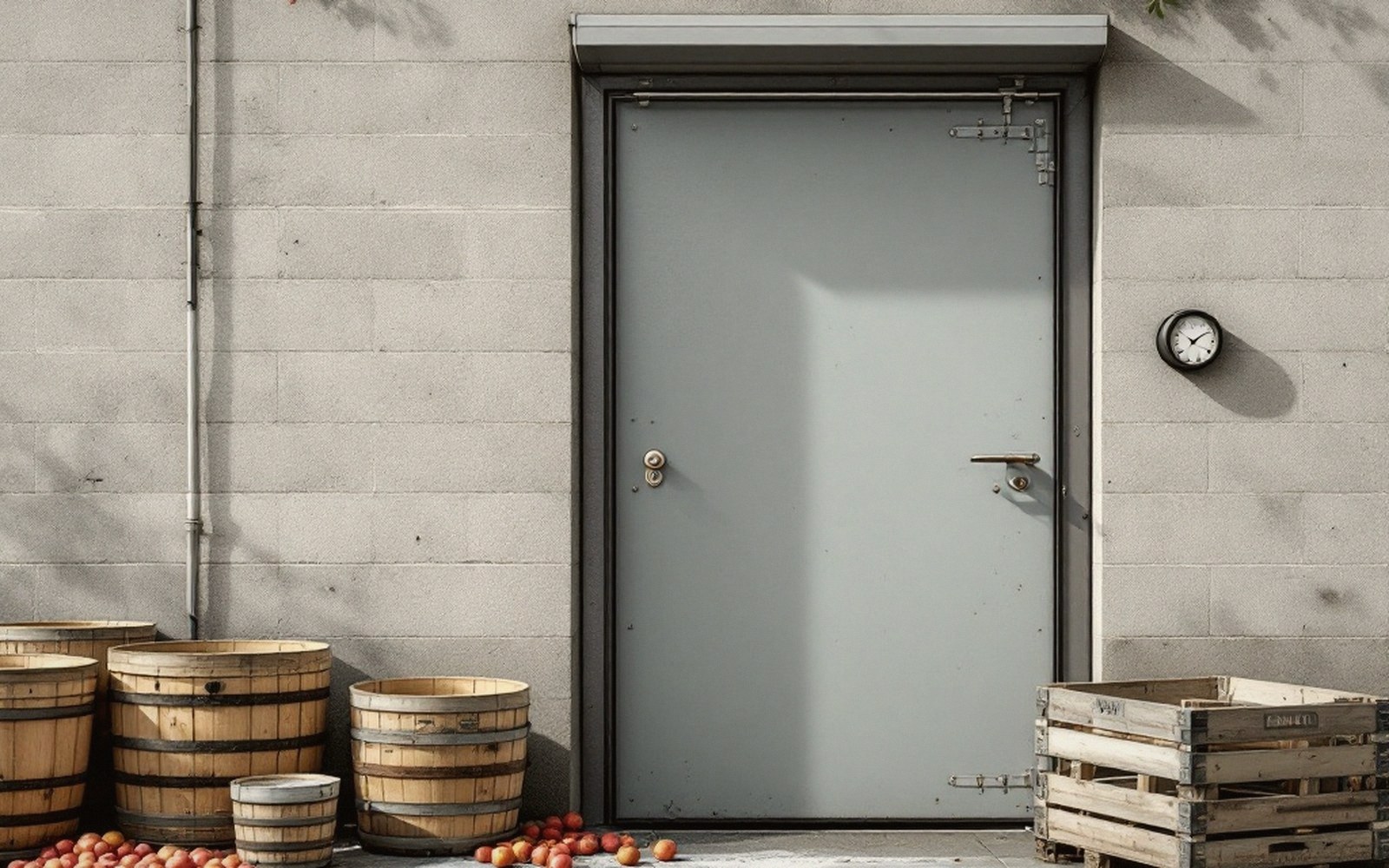
That wait can be a long one. Varieties bred and selected for storability — Braeburn, Royal Gala, Pink Lady, Fuji — can be held in good commercial condition for six to ten months. A Bramley destined for processing may be stored even longer. Without controlled atmosphere, those same fruits would be unmarketable in a fraction of the time.
Holding the numbers
The sealed room is not set once and forgotten. Gas composition drifts. The fruit itself consumes oxygen and emits carbon dioxide, so the levels must be actively managed — oxygen is lowered by a nitrogen generator or by letting the fruit's own respiration drive the levels down, then held there; carbon dioxide is scrubbed when it climbs above the target ceiling. Temperature is monitored continuously at multiple points, because a room that is 3 °C in one corner and −0.5 °C in another will give inconsistent results across the stack.
Ultra-low oxygen (ULO) storage, now common for premium long-term varieties, pushes oxygen below 1.5 percent — sometimes as low as 0.5–0.7 percent. At those concentrations the tolerance window is narrow: fall below the floor and the fruit shifts into anaerobic fermentation, producing off-flavours, a condition the trade calls low-oxygen injury. The fruit is being held at the edge of the minimum oxygen it can sustain without switching metabolic pathways. Reading the gases correctly, and trusting the sensors to do it, is the whole discipline.
- Typical CA oxygen level
- 1–2% (normal air: ~21%)
- Typical CA carbon dioxide level
- 1–5% (normal air: ~0.04%)
- CA storage temperature range
- approximately −1 °C to 4 °C depending on variety
- ULO oxygen target
- 0.5–1.5%; below ~0.5% risks anaerobic fermentation
- Storable varieties (Braeburn, Fuji, Pink Lady, Gala)
- 6–10 months viable in CA
Temperature management has its own complication. When warm fruit is loaded into a cold room, condensation forms on the surface and on the walls. Rooms are typically pre-cooled before loading, and temperature is dropped gradually after the door is sealed, following a prescribed pull-down curve rather than slamming to target overnight. Rapid pull-down stresses the fruit and can increase the incidence of internal breakdown in susceptible varieties.
The shape of the season
The sealed door goes on shortly after the room is loaded, and from that point the room is committed. Gas composition, temperature and humidity are logged constantly, and the store manager's job is largely one of holding the numbers inside a defined envelope — week after week, month after month, through winter and into the following summer.
What the system buys is time between harvest and consumer — time that makes year-round supply of a seasonal fruit possible without sacrificing condition. The apple that arrives on a supermarket shelf in July was picked ten months earlier, in a different season, by a tree that is already past its next blossom. It spent most of its life in a dark room, breathing just enough to wait.
Understock is an independent publication about orchard systems. It is not a farm, retailer or advisory service.
*Understock is an independent publication about orchard systems.
- Oxygen
- main driver of respiration; lowered by nitrogen generation or fruit's own draw-down
- Carbon dioxide
- suppresses ethylene production; scrubbed when it rises above ceiling
- Temperature
- monitored at multiple points; pull-down gradual, not abrupt
- Ethylene
- the fruit's own ripening hormone; CA atmosphere interrupts its effect
Filed under Store · boydorchards.com