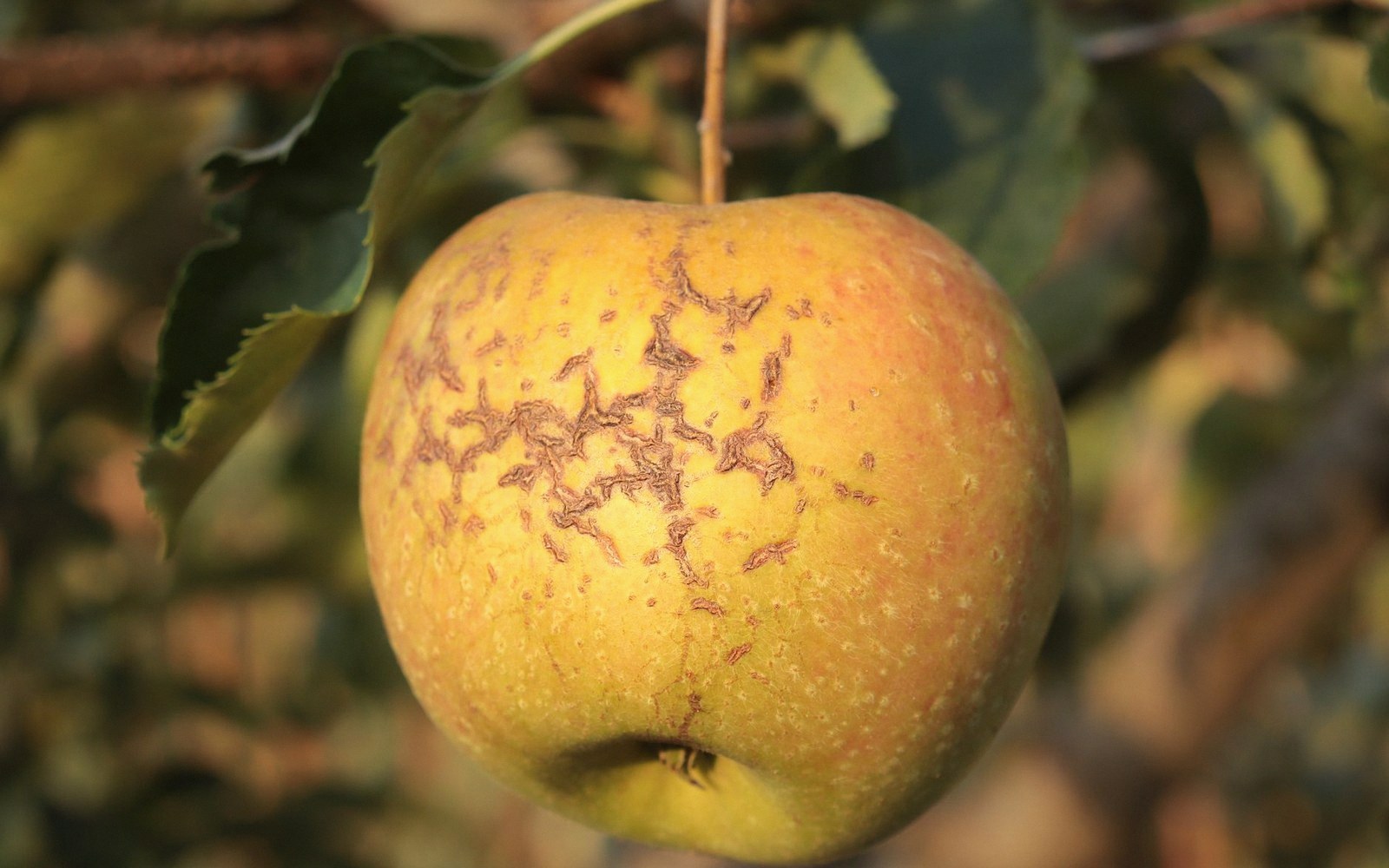
Two disorders, one disappointment
Superficial scald shows up as browning of the skin weeks into storage — diffuse, blotchy, unrelated to any mechanical injury. Bitter pit is different: small sunken pits in the flesh, often concentrated toward the calyx end, and a bitter taste where the tissue has died. Both are physiological disorders, not infections. No pathogen is involved. The damage was, in almost every case, already decided before the apple went into the room.
Scald is triggered by oxidation of alpha-farnesene, a naturally occurring compound in apple skin that accumulates after harvest. Under low-oxygen controlled-atmosphere storage, the rate of oxidation is slowed, which is part of why CA rooms were adopted so widely for susceptible varieties. Certain cultivars — Granny Smith, Cortland — are reliably prone; others much less so. Harvest date matters: fruit picked early carries more alpha-farnesene and oxidises faster.
Bitter pit is a calcium deficiency disorder in the fruit tissue itself, but the connection to soil calcium is indirect. Calcium is immobile in the plant; it moves with the transpiration stream, and the rapidly expanding tissue of a large apple late in the season may not receive enough. Big fruit, high crop load, vigorous shoots competing for the same supply — each raises the risk. The problem is set in the orchard through the growing season; storage merely reveals it.

Both disorders are aggravated by poor temperature management in the first days after harvest. Rapid cooling to the target temperature reduces metabolic activity across the board. A room that cools slowly gives scald-prone skin more hours at the worst oxidation range and lets bitter pit lesions develop further before respiration falls.
The practical lesson is that storage is not a corrective. A grower who harvests scald-prone varieties late and cool, manages crop load to limit fruit size, and gets fruit to temperature quickly will see less of both disorders. The room preserves a good apple. It cannot rescue a compromised one.
- Superficial scald
- diffuse brown patches on the skin surface; no decay beneath
- Bitter pit
- small sunken pits in flesh, typically toward the calyx end; tissue bitter to taste
Rapid cooling to the target temperature reduces metabolic activity across the board.
- Scald risk
- variety susceptibility, harvest date, oxidation of alpha-farnesene during storage
- Bitter pit risk
- calcium mobility in fruit, fruit size, crop load, shoot vigour during the growing season
- Both worsened by slow initial cooling after harvest
Filed under Store · boydorchards.com