Bench Grafting
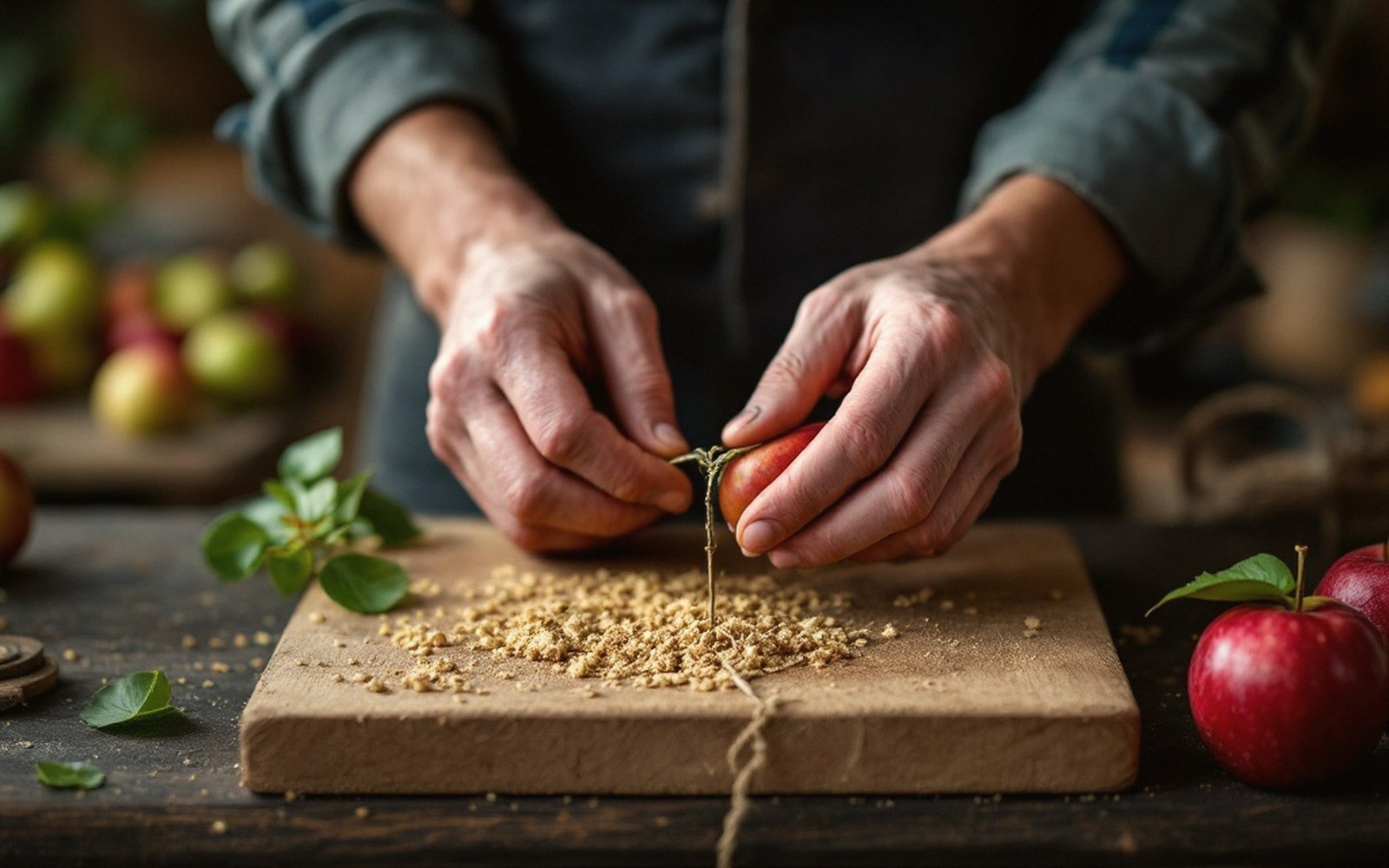
Made indoors in winter, a whip-and-tongue cut bound and left to knit.
The Work Before the Season
Bench grafting happens in late winter, weeks before anything outside is ready to move. The grafter sits at a table — hence the name — with dormant rootstock on one side and bundled scion wood on the other. Both must be dormant. Both must be alive. The window when those two conditions overlap is narrow, and most orchards schedule the work in January and February to hit it cleanly.
The standard cut is the whip-and-tongue: a long, angled slice through each piece, then a second cut into the face of each bevel to produce an interlocking tongue. When the two pieces come together, the tongues mesh and the cambium — the thin generative layer just under the bark — aligns along at least one edge of the join. Cambium meeting cambium is the whole mechanism. Everything else is just holding the two pieces still while that contact does its work.
Scion wood is collected earlier, usually in December or January before any bud break. Cut from the previous season's growth, the sticks are bundled, labelled and held cold. A few budded nodes per stick are enough; most grafts use a piece with two or three buds and are cut to a pencil-width to match the rootstock diameter. Matching the diameter on both pieces is not optional — a graft where one side is significantly thicker than the other will callus unevenly, and the callus ridge it eventually forms will tell you exactly what went wrong.
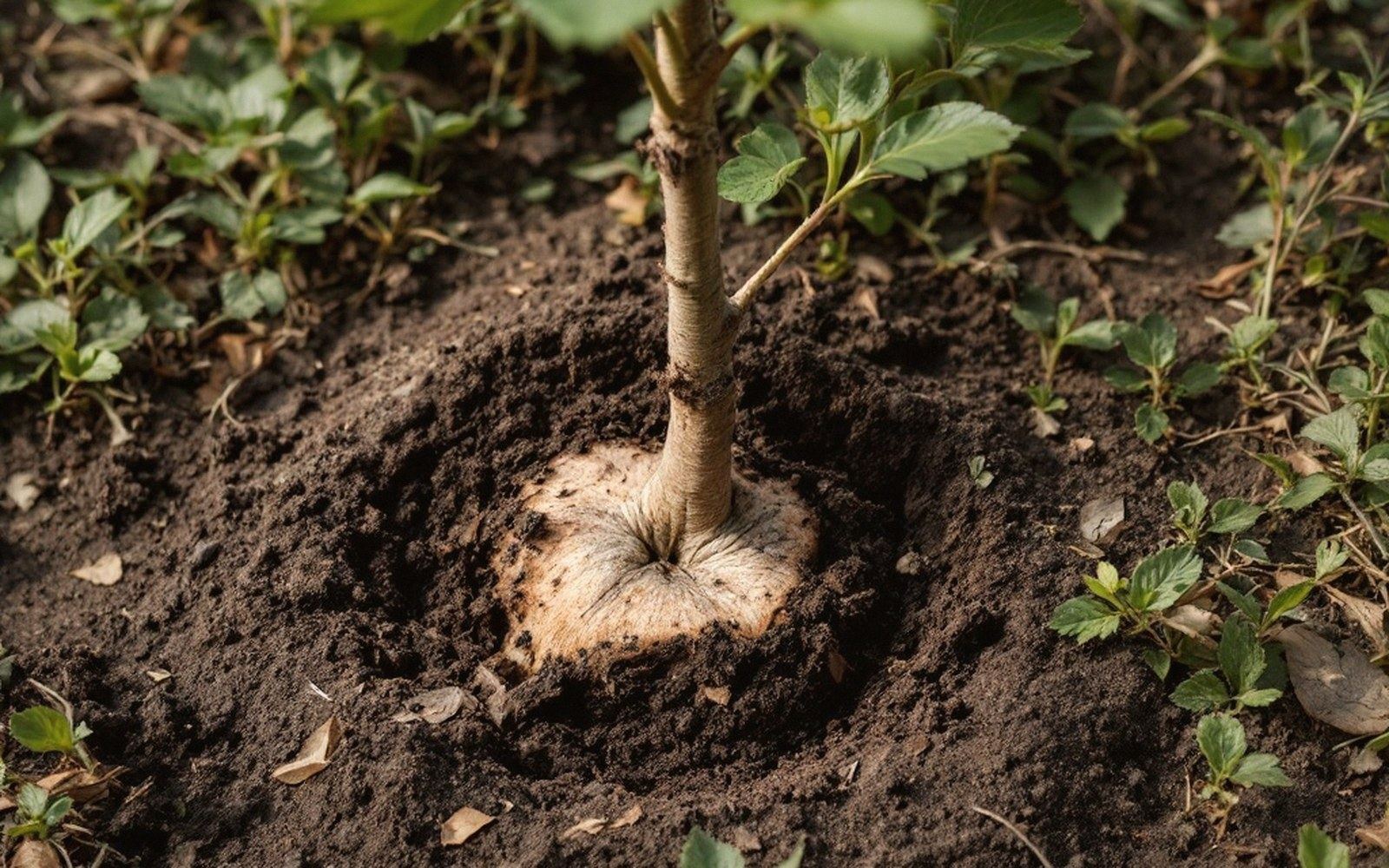
Once the tongue is seated and the cambium lined up, the joint is wrapped — grafting tape or a proprietary wax-based strip, pulled tight in overlapping spirals. The tape does two jobs: it holds the alignment under tension while the union knits, and it keeps the exposed wood from drying out before the callus forms. Desiccation is the main killer of a bench graft in the first two weeks.
The completed grafts go into a callusing environment: warm enough to promote cell division — around 18 to 22 °C — and humid enough to prevent desiccation, but not so wet that fungal problems take hold. After two to three weeks, visible callus forms at the union. At that point the grafts are moved to cold storage to hold dormancy until planting conditions allow.
The bench is where variety and rootstock first meet as a single plant. Everything the tree will eventually be — its vigour, its precocity, its anchorage — flows from that join, which is why a grafter who rushes the cambium alignment costs the operation far more than the few seconds saved.
- Scion collection
- December–January, dormant wood, held cold
- Rootstock preparation
- matched diameter, sliced to the same angle
- Whip-and-tongue cut
- long bevel plus interlocking tongue on each face
- Cambium alignment
- at least one edge, the critical step
- Wrapping
- tape or wax strip, tight overlapping spirals
- Callusing environment
- roughly 18–22 °C, high humidity, two to three weeks
- Cold storage
- holds dormancy until outdoor planting
The bench is where variety and rootstock first meet as a single plant.
- Whip-and-tongue
- the interlocking double-cut that resists pull-apart before callus forms
- Cambium
- the thin cellular layer under the bark where union tissue originates
- Scion wood
- dormant current-season growth carrying the desired variety
- Callus
- the mass of undifferentiated cells that bridges the cut faces and becomes the union
Filed under Union · boydorchards.com