Dwarfing is a restriction
A dwarfing stock works by limiting what gets past the union. What that costs in anchorage and drought tolerance.
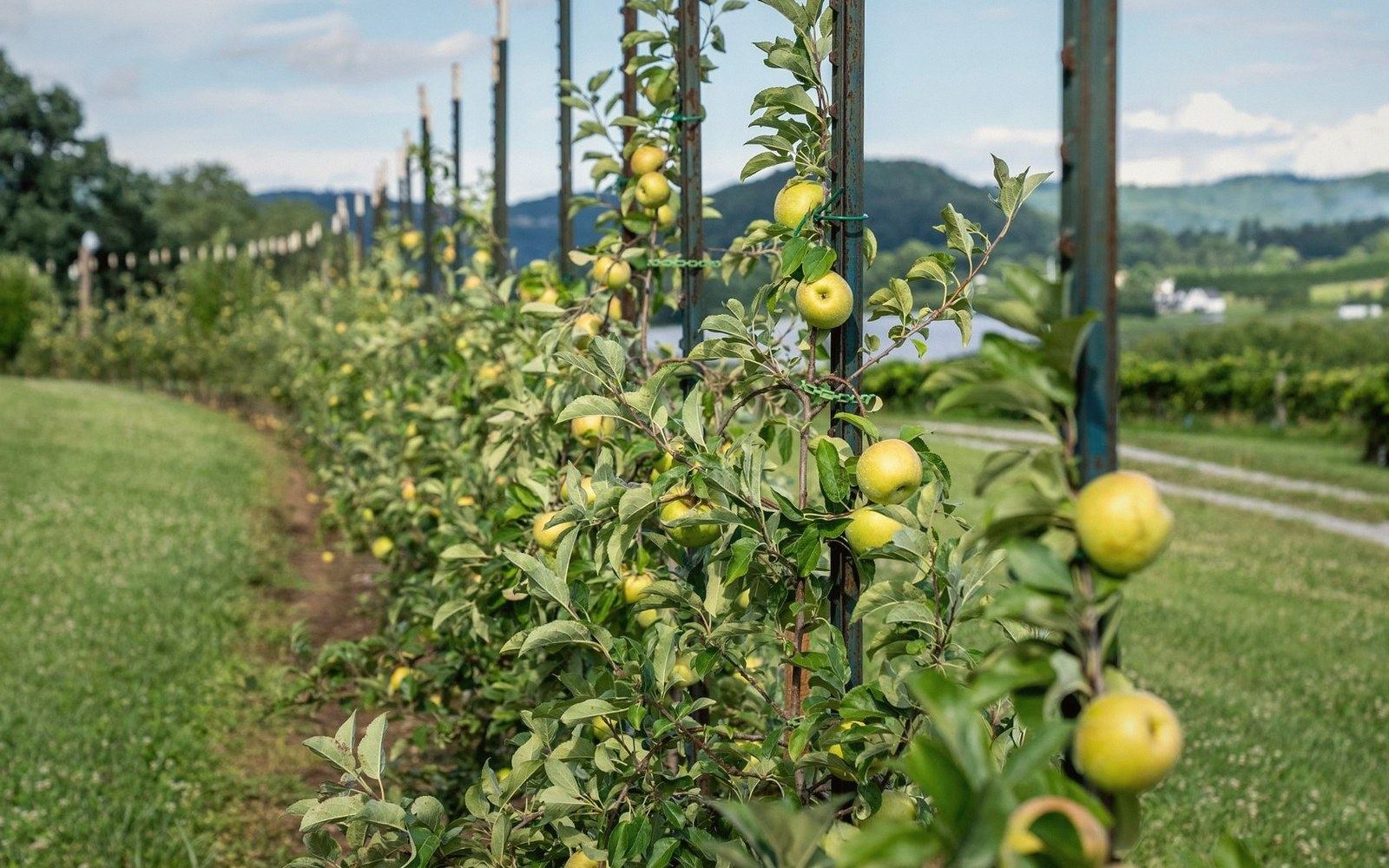
The rootstock doesn't shrink the tree — it throttles it. Understanding what gets held back explains everything else about how a modern orchard is built.
What happens at the union
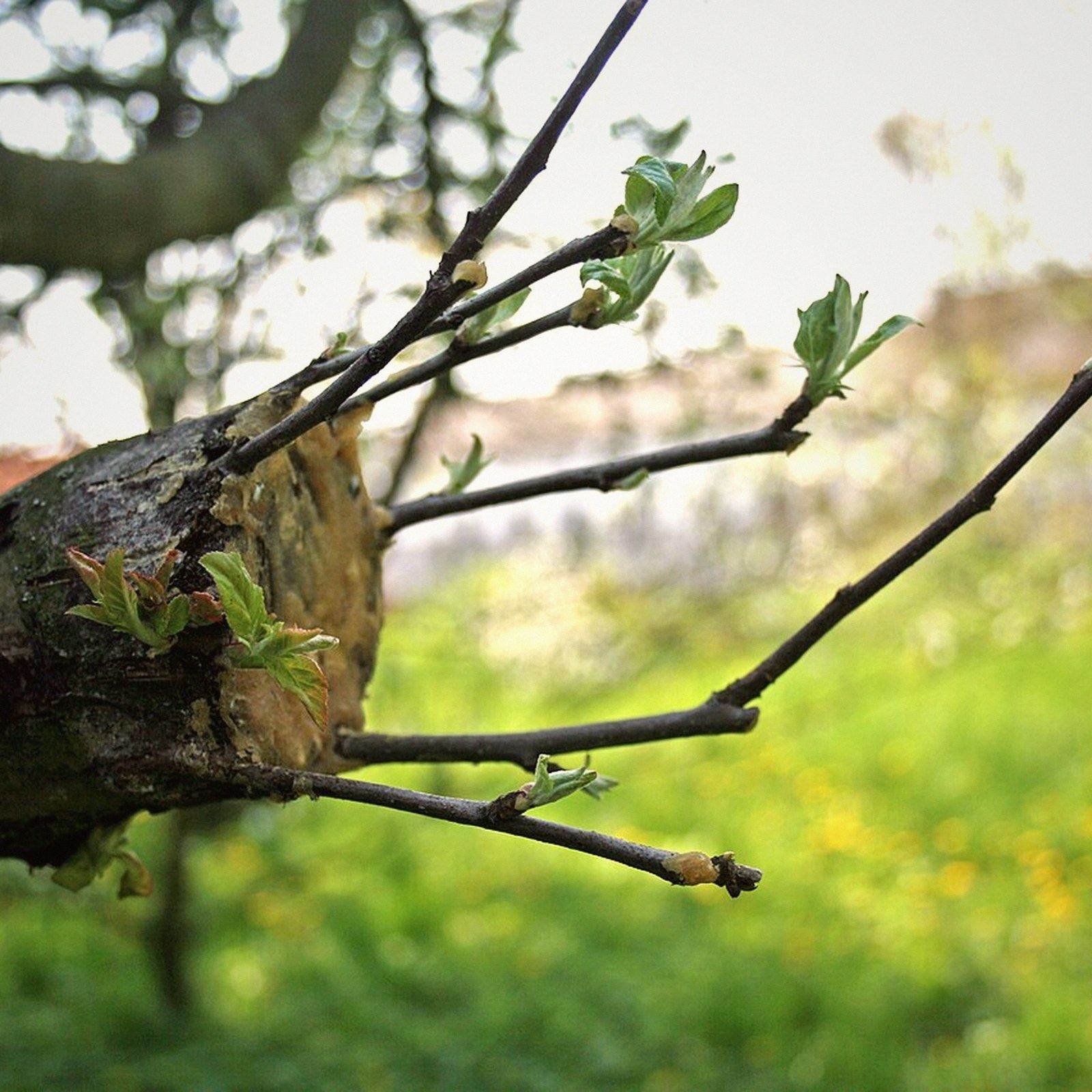
A dwarfing rootstock works by interruption. The graft union is not a smooth pipe; it is a junction between two genetically different woods, and in a dwarfing combination that junction is partially obstructive by design. Water, dissolved minerals and the carbohydrates moving down from the canopy all pass through a zone of imperfect conduction. The cambial tissues aligned across the union never match quite well enough to carry the full volume the scion would otherwise demand. The tree tries to grow; the rootstock limits what gets through; the result is a smaller, earlier-fruiting tree on shorter annual extension.
This is why dwarfing stocks like the widely planted Malling 9 — selected at East Malling Research Station in Kent and in commercial use since the mid-twentieth century — produce trees that crop within two or three years of planting but stand only two to three metres tall at maturity. The restriction is the product, not a side effect. The same conductive limitation that caps vegetative growth also pushes the tree toward reproductive effort earlier in its life, which is exactly what the economics of a modern high-density planting require.
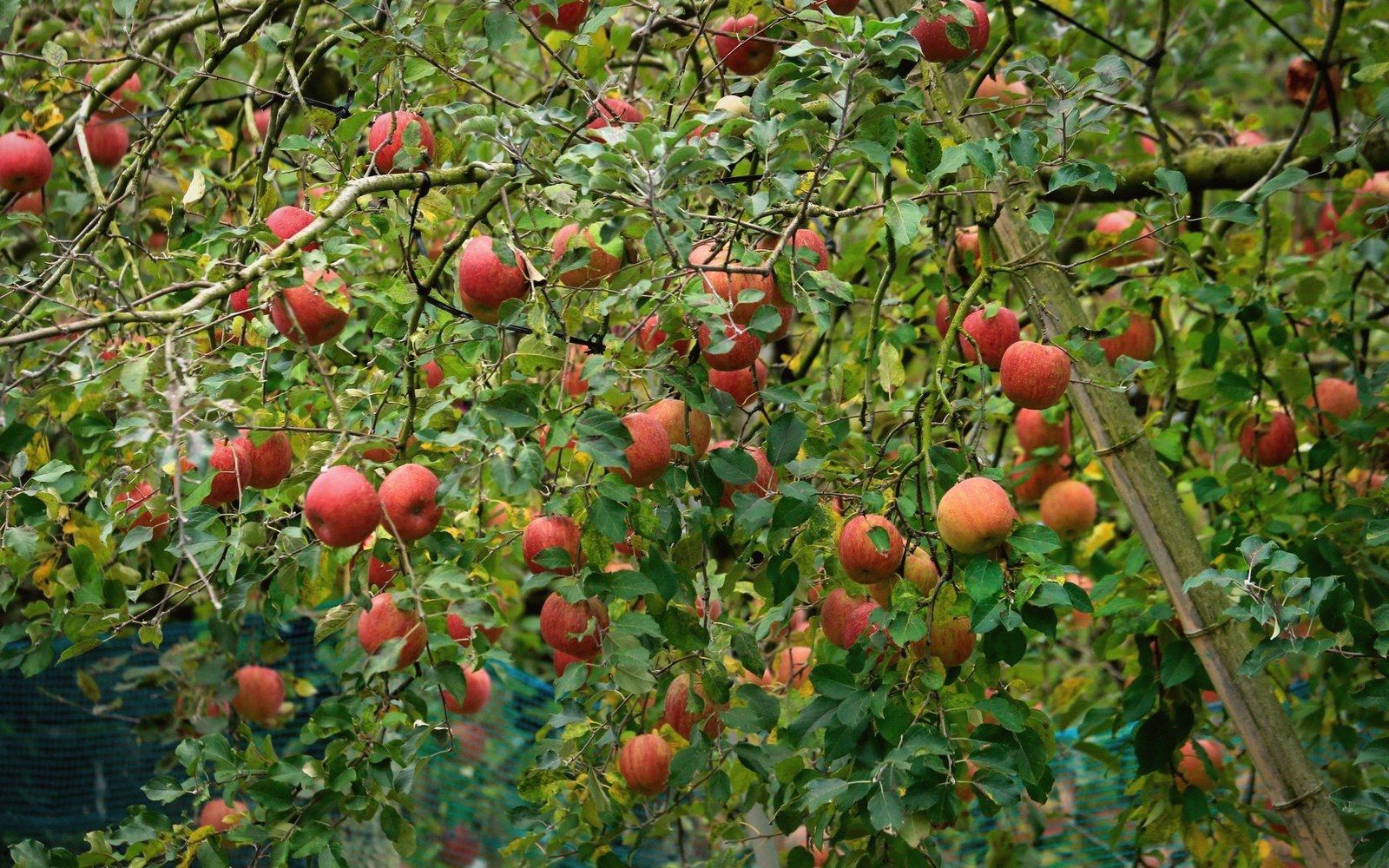
The tradeoff is structural. A tree with a strong, deep rootstock — a seedling or a vigorous frame like MM.111 — anchors itself. The roots explore widely, find water at depth and brace the trunk against wind without any outside help. A tree on M.9 does none of this reliably. Its root system is fibrous, shallow and concentrated close to the trunk. In a wet soil it sits near the surface; in a dry one it cannot chase the water table. In any wind, it tips. The anchorage that vigour once provided has to be supplied artificially, which is why the posts and four wires of a modern high-density block are not decorative — they are load-bearing. Remove the support structure and the trees fall.
What it costs in drought
Shallow roots mean shallow access. A dwarfing rootstock keeps the tree's water-uptake zone in the top layer of the soil profile, precisely where moisture disappears first in a dry summer. A tree on MM.111 may reach a metre or more deeper; a tree on M.9 typically does not. In a year with a dry June and July — the two months when cell division inside the developing fruit is still rapid — that limitation is visible in final fruit size and can be felt at harvest in texture. The fruit finishes smaller, sometimes harder in the flesh than the variety would otherwise produce, because the cells never divided quite as many times as they should have.
Growers on light or free-draining soils often install drip irrigation at planting specifically because they have chosen a dwarfing stock and know they have traded drought resilience for precocity. The irrigation line is as essential as the wire: both are compensating for what the rootstock took away.
- Malling 9 (M.9)
- the dominant commercial dwarfing rootstock; selected at East Malling Research Station, Kent
- MM.111
- a vigorous semi-dwarfing stock with deep, drought-tolerant roots; used on lighter soils
- Budagovsky series
- cold-hardy dwarfing stocks from Russian breeding programmes
- Geneva series
- dwarfing and semi-dwarfing stocks developed at Cornell University, New York; selected for disease resistance alongside size control
- Graft union
- the junction between rootstock and scion; in dwarfing combinations, imperfect conduction here is the mechanism of size control
The restriction is the point
None of this is a failure of breeding. Malling 9 and its successors — the Budagovsky and Geneva series among them, developed in Russia and at Cornell University respectively — were selected precisely because the restriction was productive. Smaller tree, lower training costs, earlier return on capital, higher fruit quality from better light penetration into a compact canopy. The modern intensive orchard exists because breeders understood that a throttled union, properly supported and watered, outyields a free-standing tree on vigorous roots by a wide margin per hectare.
What a grower takes on is the whole compensatory infrastructure: the posts, the wire, the anchor, the irrigation. The rootstock decides the eventual scale of all that investment before a single tree goes in the ground. Choosing a dwarfing stock is choosing to build a support system. The restriction at the union is the reason the wires are there.

The restriction at the union is the reason the wires are there.
- Anchorage
- dwarfing roots are fibrous and shallow; trees require permanent wire support
- Drought tolerance
- shallow root zone loses soil moisture faster; drip irrigation often essential
- Time to first crop
- dwarfing stocks typically fruit in 2–3 years; vigorous stocks may take 6–8
- Tree height at maturity
- M.9 typically 2–3 m; seedling rootstock trees can reach 6–8 m or more
Filed under Union · boydorchards.com