Reading the callus ridge
Where scion meets stock, the union leaves a visible record of how the graft went.
What the ridge tells you
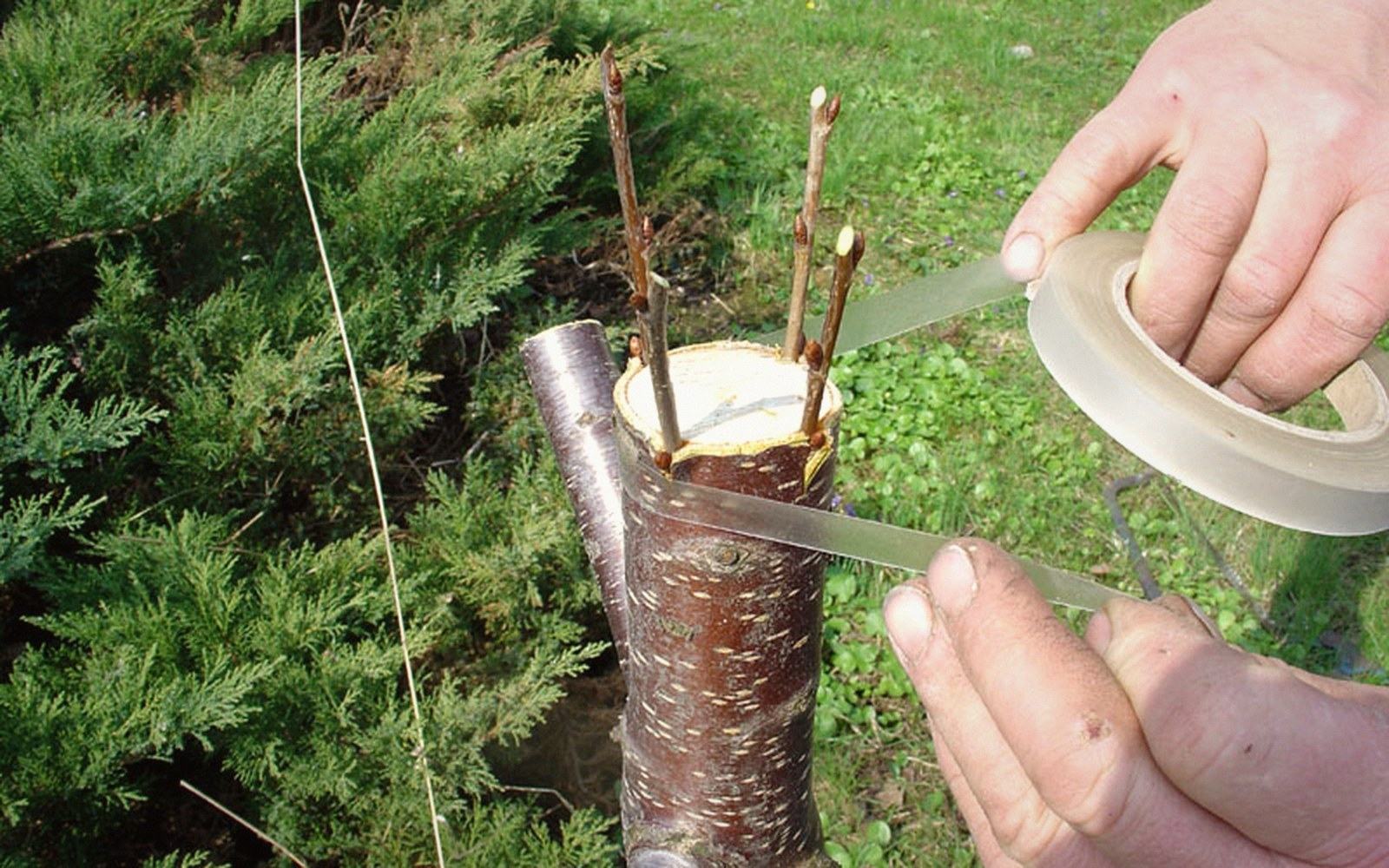
Run a finger along the graft union on any well-made tree and you'll find a raised line — the callus ridge — where the cambium layers of rootstock and scion knit together. That ridge is not a scar in the pejorative sense. It is evidence of successful vascular connection: both tissues generated callus, they met cleanly, and the resulting bridge hardened into woody tissue that conducts water and carbohydrate in both directions.
A good union looks subtly swollen, symmetrical and continuous around the stem. The bark on either side transitions smoothly; the ridge itself is firm and sits flush enough that you could almost miss it on a mature tree. What you should not see is a sharp step change in diameter — the scion visibly thicker than the stock, or vice versa, with no gradual taper between them. A pronounced step indicates the cambium layers were poorly aligned at the time of bench grafting, or that the binding was released too early before the bridge fully formed.
Color matters too. Healthy callus, once covered by bark, darkens to match the surrounding tissue within a season or two. A union that stays pale, shows cracking bark, or weeps a gummy exudate is under mechanical stress or has a latent incompatibility working against it. Some incompatibilities announce themselves within two or three growing seasons; others take a decade, by which point the tree looks suddenly hollow-stemmed when it finally snaps at the union under a load of fruit.
What a failing union looks like
The tell-tale signs accumulate rather than arrive at once. Sparse, off-season foliage on the scion portion is often the first signal — the canopy is being starved from below. Look lower and you may find the union has developed a faint groove or a ring of dead bark. Flex the stem gently and a failing union occasionally reveals itself as a soft pivot point; a sound one does not move at all.
The depth of the union in the soil matters as much as its internal structure. Planted too deep, the scion generates its own adventitious roots, bypasses the rootstock entirely and defeats whatever dwarfing was intended — a buried failure that a callus ridge above ground level cannot warn you about.
- Healthy union
- symmetrical ridge, smooth bark transition, firm to the touch
- Poor cambium alignment
- visible step change in stem diameter above and below the union
- Mechanical stress or incompatibility
- cracking bark, gummy exudate, pale persistent tissue
- Failing union
- sparse canopy on scion side, ring of dead bark, slight flex at the union under pressure
- Buried union risk
- scion roots form, dwarfing effect lost, no visible warning at the union itself
The depth of the union in the soil matters as much as its internal structure.
Filed under Union · boydorchards.com