Posts and four wires
A modern high-density planting is a fence that happens to carry trees. Understanding it as a fence first makes the rest clear.
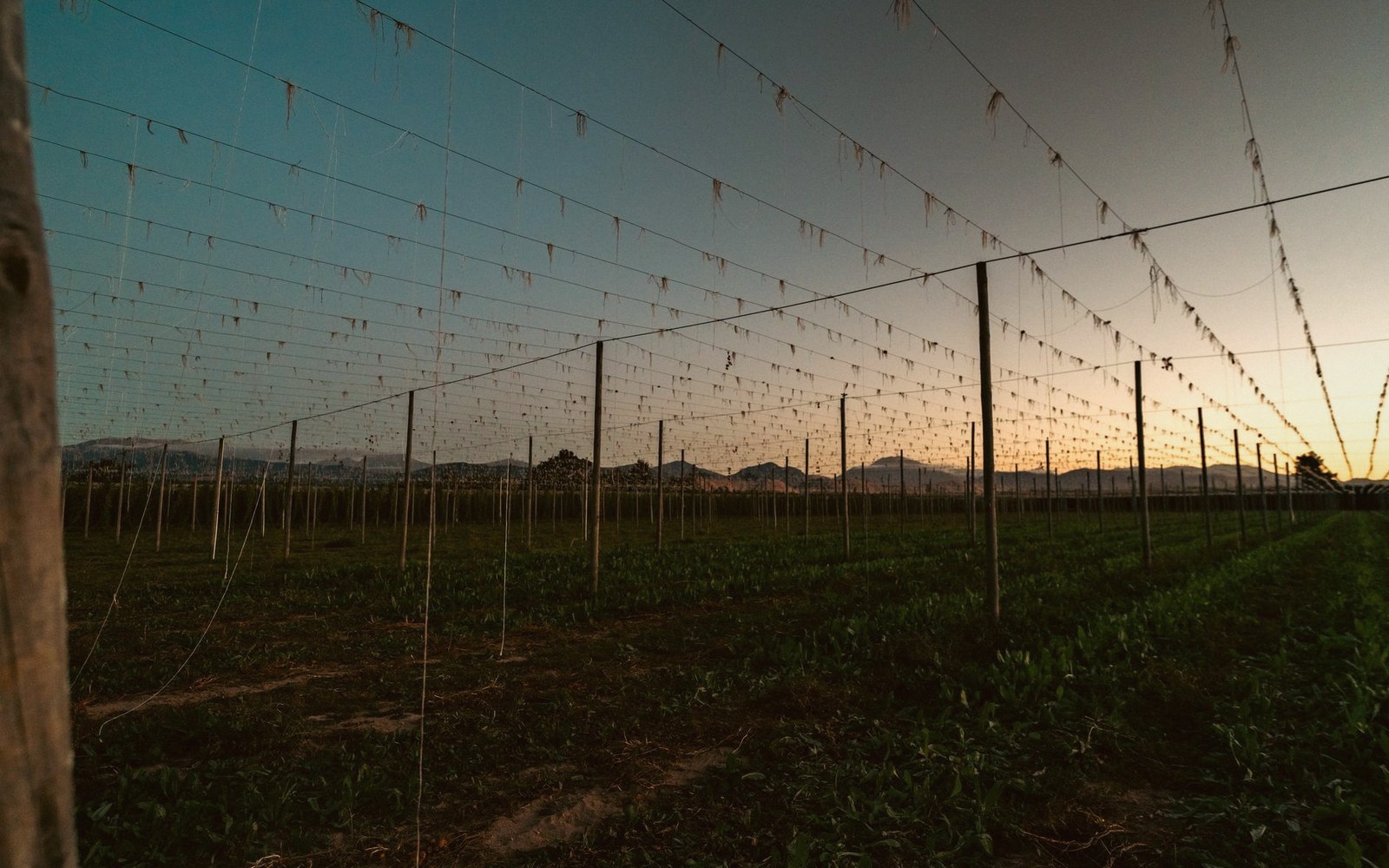
A modern planting is a fence with trees tied to it. What each wire carries.
What the structure is doing
Strip away the biology and what you see in a commercial apple block is a tensioned wire trellis — corner assemblies, line posts at regular intervals, wires strung at set heights and pulled tight. The trees are secondary. They are attached to the system, not the other way around.
This matters because the forces are fence forces: horizontal tension in the wire, compression down through the posts, lateral loading when wind hits a full canopy in leaf. A central-leader tree on a dwarfing rootstock like M.9 has an almost non-existent root plate. It cannot stand unaided. The trellis is not a training aid; it is the structure that allows the planting to exist at all.
The strainer post at each row end carries the anchor loads. Line posts — typically pressure-treated softwood, round or square-profiled, sometimes galvanised steel tube on newer installations — are set at intervals of roughly three to four metres and carry nothing but the wire and the weight of the trees tied to them. The wire does the real work. Most modern orchards use high-tensile wire: thinner than traditional fencing wire, tensioned to a much higher level, and capable of running a long row without intermediate bracing.
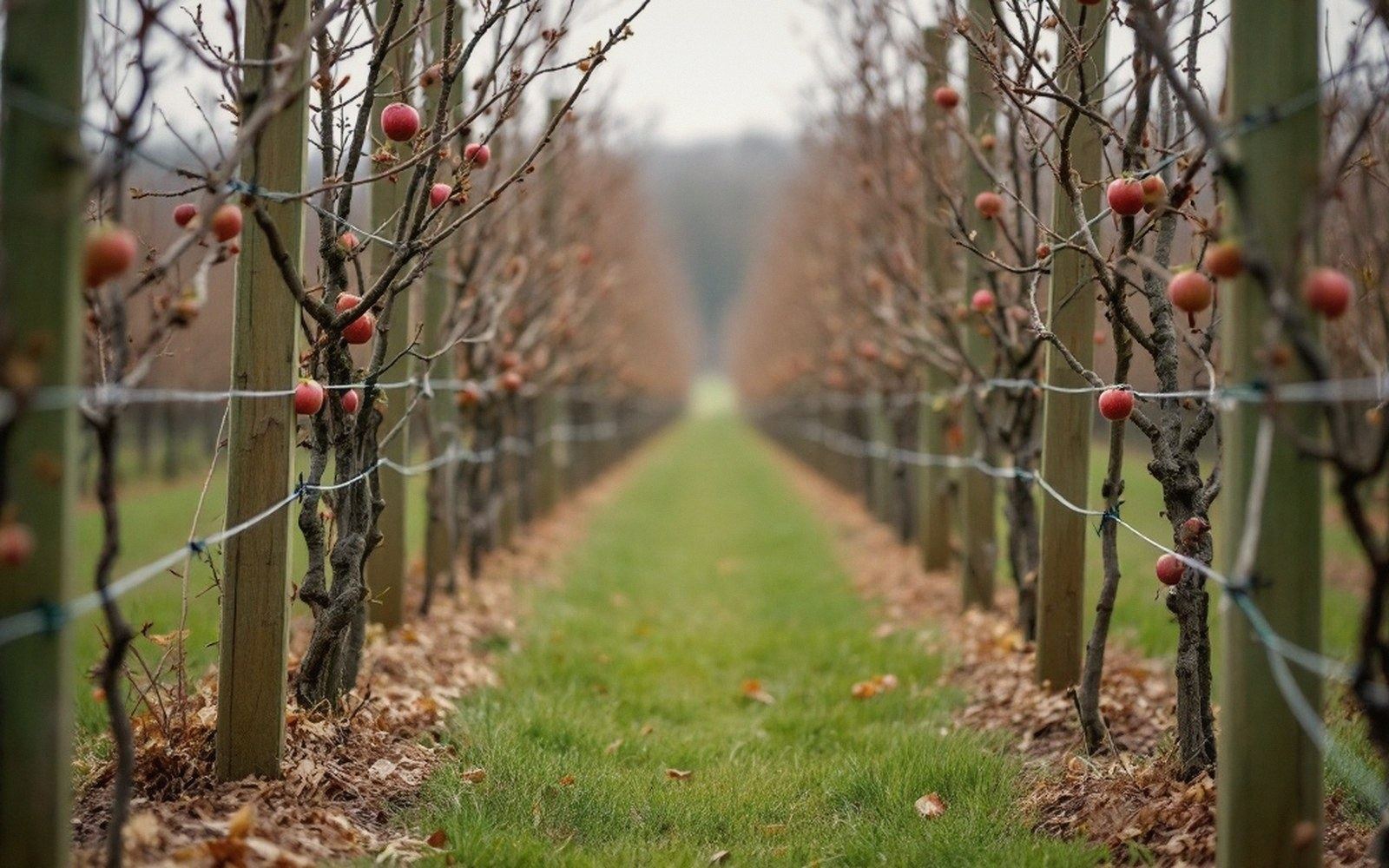
What each wire carries
Four wires is the standard in a tall-spindle or slender-spindle block, and each one has a distinct job.
The lowest wire sits at around forty to fifty centimetres — near knee height. Its job is largely mechanical: the young tree is tied to it immediately after planting, establishing the first fixed point on the leader. It also anchors the tree base against the rocking that would otherwise destroy new root development in the first season. Some growers run a fifth wire below this for very young stock, but four covers the mature structure.
The second wire, at roughly eighty to ninety centimetres, catches the developing scaffold zone. Lateral branches that will eventually become the permanent fruiting tiers are trained to or through this zone, and the leader is registered against it as it grows upward.
- Bottom wire (~45 cm)
- anchors the young leader, prevents rocking at the base
- Second wire (~85 cm)
- registers developing scaffold laterals
- Third wire (~145 cm)
- main structural load in a bearing tree; first to sag if tension is off
- Top wire (~220 cm)
- defines tree-height ceiling; limits top-canopy swing in wind
The third wire — often the one the eye lands on first because it sits at around chest height, one hundred and forty to one hundred and fifty centimetres — carries the main structural load of the bearing tree. By full canopy, a significant proportion of branch weight is resting or tied here. This wire takes the most abuse and in a badly tensioned row it is the first to sag.
The fourth wire is the top wire, at two to two and a half metres depending on target tree height. Its primary role is to define the ceiling. The leader is tied to it and, once the tree reaches that height, managed at or just below it. In high winds, it also prevents the tops of adjacent trees from swinging into each other — a source of bark damage that looks minor but opens infection courts.
Why spacing and height are not approximate
The heights above are not conventions from habit; they correspond to the tiers at which fruiting wood naturally develops on a trained central leader and to the reach of the pickers who work the row. Pack the wires too close and you lose the distinct training zones. Set the top wire too high and you create canopy the crew cannot reach without a platform, which changes the whole economics of the block.
The row is designed from the harvest back: what height can a person pick from the ground or a single step, what tree density fills the wire spacing without shading the tier below, what post interval keeps the wire from sagging under the load of a full crop year. The fence was always the answer. The trees make it look like something else.
Pack the wires too close and you lose the distinct training zones.
Filed under Structure · boydorchards.com