High-tensile wire
The wire that holds the whole system taut — and why you must never confuse it with ordinary fencing wire.
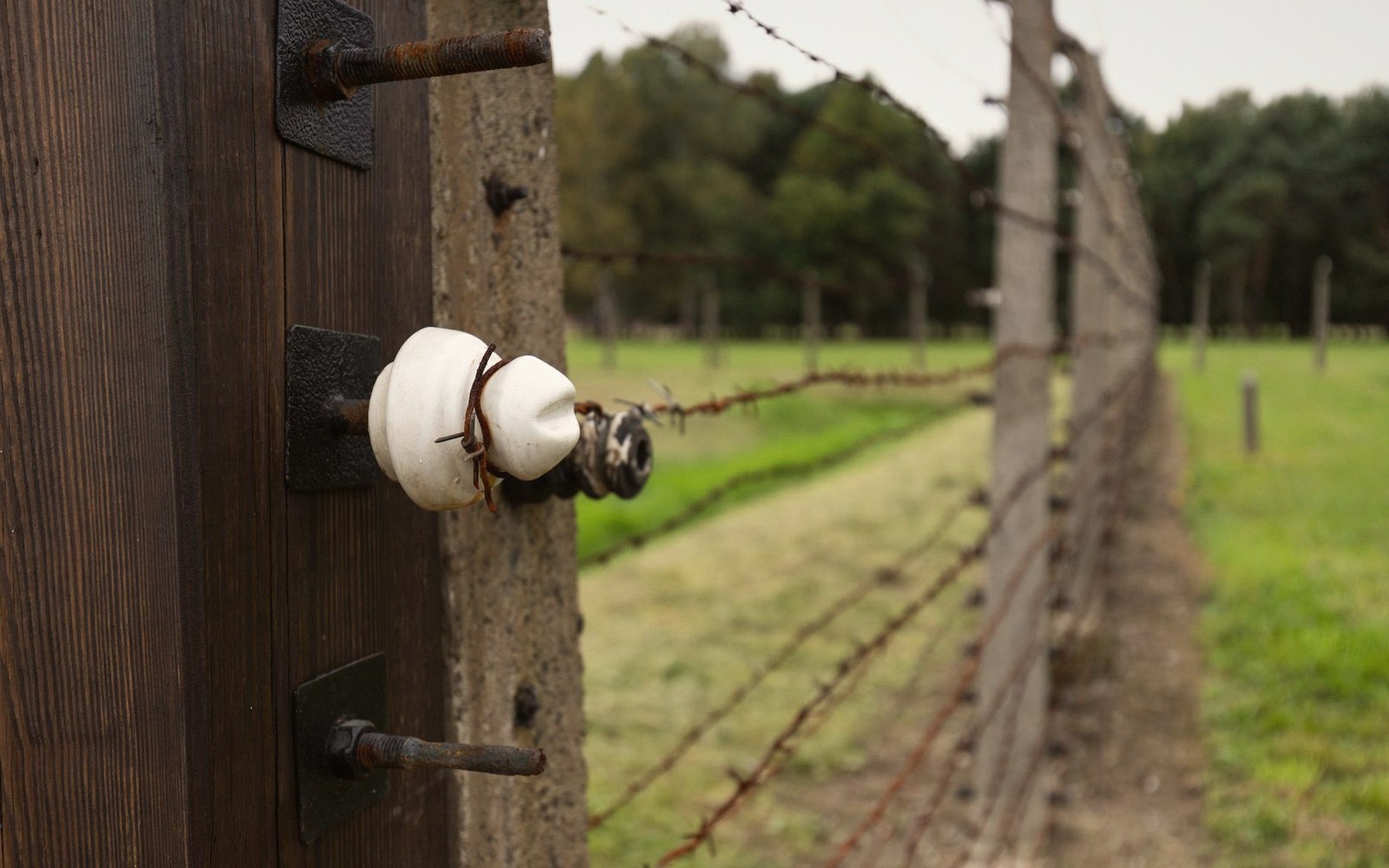
Thin, strong and unforgiving. Tension, staples and what happens in frost.
What makes it different
High-tensile wire is drawn harder than conventional mild-steel wire, which makes it thinner for the same breaking load and capable of carrying far greater tension without creep. An orchard line typically runs at gauges around 12.5 or 12 — slender enough to look almost incidental until you try to cut it with the wrong tool. That thinness matters: less shading, less weight on the posts, less thermal mass.
The tension itself is doing structural work. In a modern planting on posts and four wires, the wires are not merely resting in staples — they are under load, and that load transfers all the way to the end assembly. Slack wire cannot position a tree. It allows movement, which allows bark abrasion, which opens a wound. The line must stay live.
Frost and the coefficient of thermal expansion
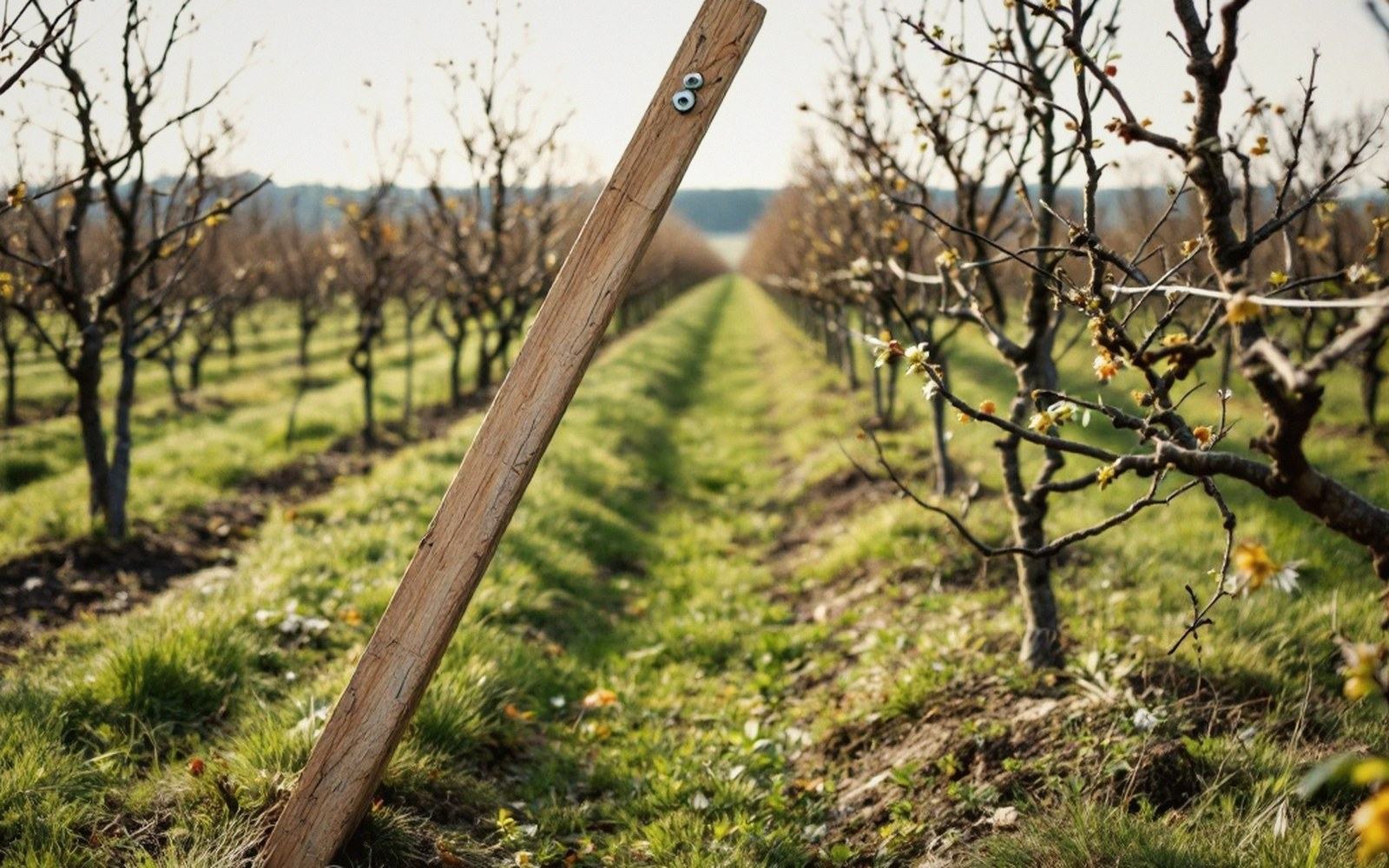
Here is where high-tensile wire demands respect. Steel contracts in cold and expands in heat, and a long run of wire amplifies that movement considerably. On a sharp frost night, a row that was correctly tensioned at ten degrees can go bar-taut by morning; on a summer afternoon, the same wire sags. The end assembly — post, anchor, tensioner — must absorb that cycling without failing. Adjustable in-line tensioners, often called strainers or box strainers, allow the wire to be re-tightened seasonally, but they also give a controlled amount of give so the system does not rack itself apart.
Stapling to intermediate posts compounds this: a staple that grips too firmly pins the wire and concentrates stress at that point. The standard practice is a semi-loose staple that lets the wire slide, distributing movement along the full run rather than loading a single post.
High-tensile wire cannot be spliced casually. The temper that gives it strength also makes standard wire knots unreliable; purpose-made ferrules or dedicated joining sleeves are used instead. Get that wrong and the join is the weakest point in a structure whose entire logic depends on continuous tension.
- Gauge
- wire diameter; orchard lines commonly around 12 or 12.5 gauge
- Creep
- gradual permanent elongation under load; high-tensile wire resists this better than mild steel
- In-line tensioner (box strainer)
- adjustable fitting that allows seasonal re-tightening and absorbs thermal movement
- Semi-loose staple
- stapling method that lets wire slide along intermediate posts, spreading thermal stress across the run
- Ferrule / joining sleeve
- purpose-made fitting for splicing high-tensile wire, replacing unreliable hand-tied knots
The end assembly — post, anchor, tensioner — must absorb that cycling without failing.
Filed under Structure · boydorchards.com