
The post that carries everything else
Every wire in the row terminates at a strainer post, and the strainer post exists for one reason: to resist the cumulative tension of every span. A line post merely holds wire at height; the strainer post holds the whole assembly together. Get it wrong and the row concertinas inward from the end, dragging every tree with it.
Strainer posts are set at an angle — typically leaning away from the row, into the pull — and anchored against that pull either by a diagonal brace to a second short post buried in the ground, or by a screw anchor driven into the soil at the headland. The angle is not decorative. It places the post's own mass and the soil bearing against it directly in the line of tension, which is a far more efficient use of material than relying on a vertical post to resist a horizontal load by bending.
The post itself is heavier and longer than anything else in the row. Where a standard line post might be a hundred millimetres in diameter, a strainer post runs to a hundred and fifty or more, and it goes deeper — at least a metre in the ground, often considerably more in lighter soils. Hardwood, pressure-treated softwood and steel tube are all used; the choice comes down to what local suppliers stock and how long the planting is expected to stand. A commercial apple block planted on dwarfing rootstock is expected to run twenty years or more before replanting, and the strainer posts need to outlast it.
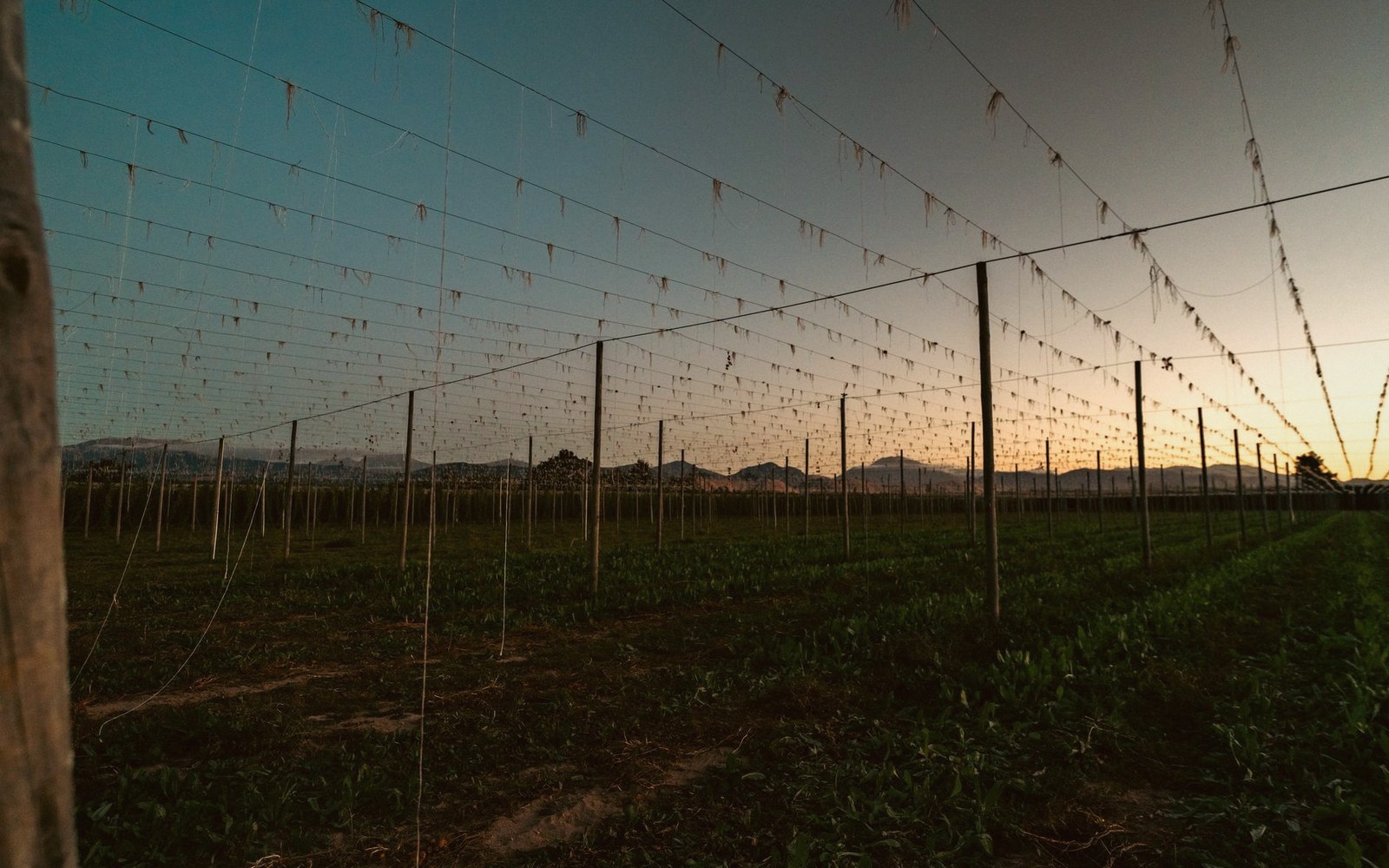
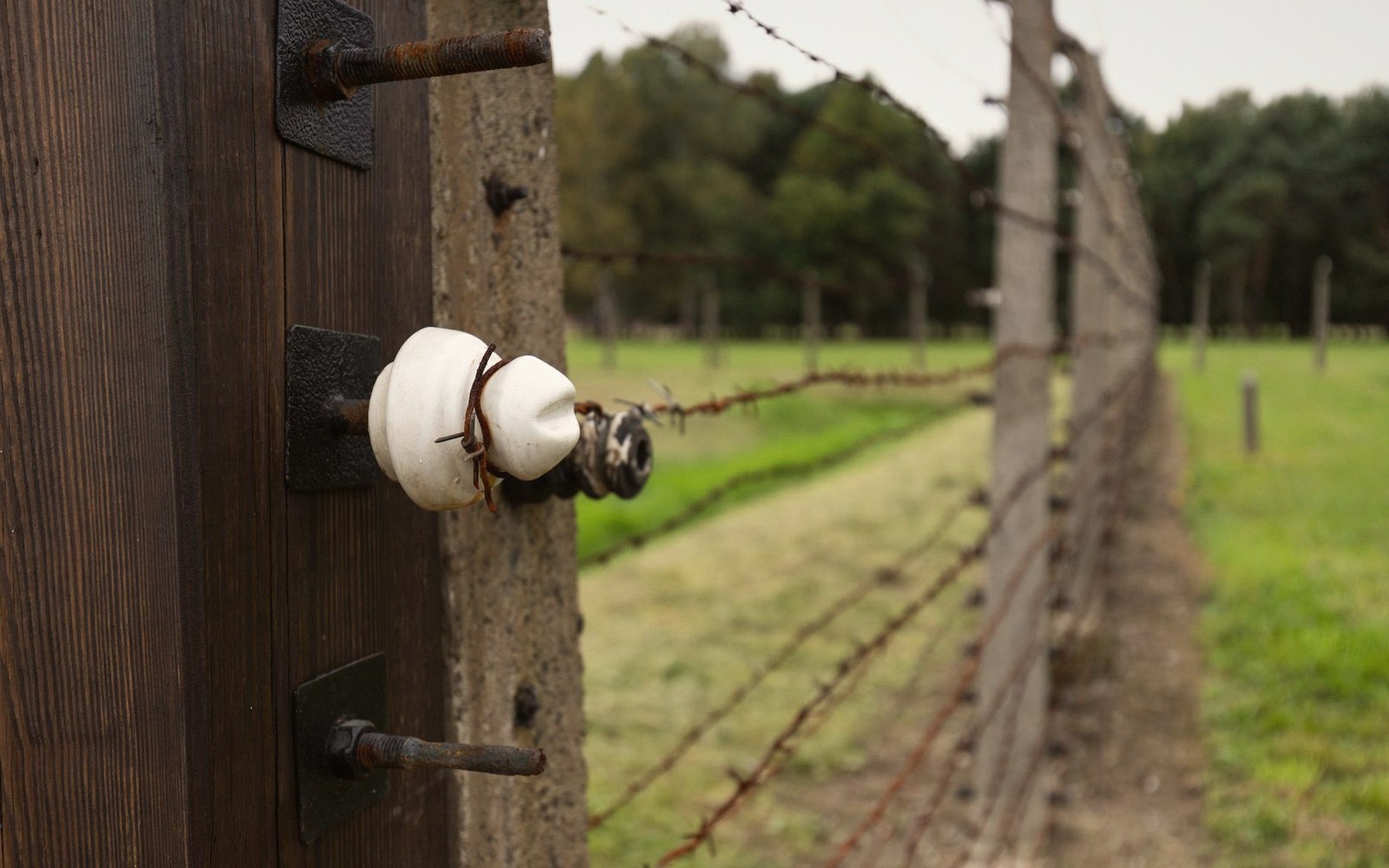
Wire is not simply nailed to a strainer post and tensioned. It passes through or around a fixed point and is secured so that individual wires can be retensioned without disturbing the others. Tensioning matters: high-tensile wire moves seasonally with temperature, and a wire that is slack in July may be dangerously taut after a hard frost. The strainer post must hold against that cycling load year after year.
Where two rows meet at a shared headland, strainer posts often face each other with only a machine-width gap between them. The headland is tight, the turns are tight, and the posts are not going anywhere.
- Angle of lean
- post leans away from the row to put its mass in the line of tension, not against bending
- Anchor options
- diagonal timber brace to a ground post, or a screw anchor driven into the headland
- Post dimensions
- heavier diameter and greater burial depth than any line post in the row
- Wire attachment
- individual wires fixed so each can be retensioned independently
The post itself is heavier and longer than anything else in the row.
Filed under Structure · boydorchards.com