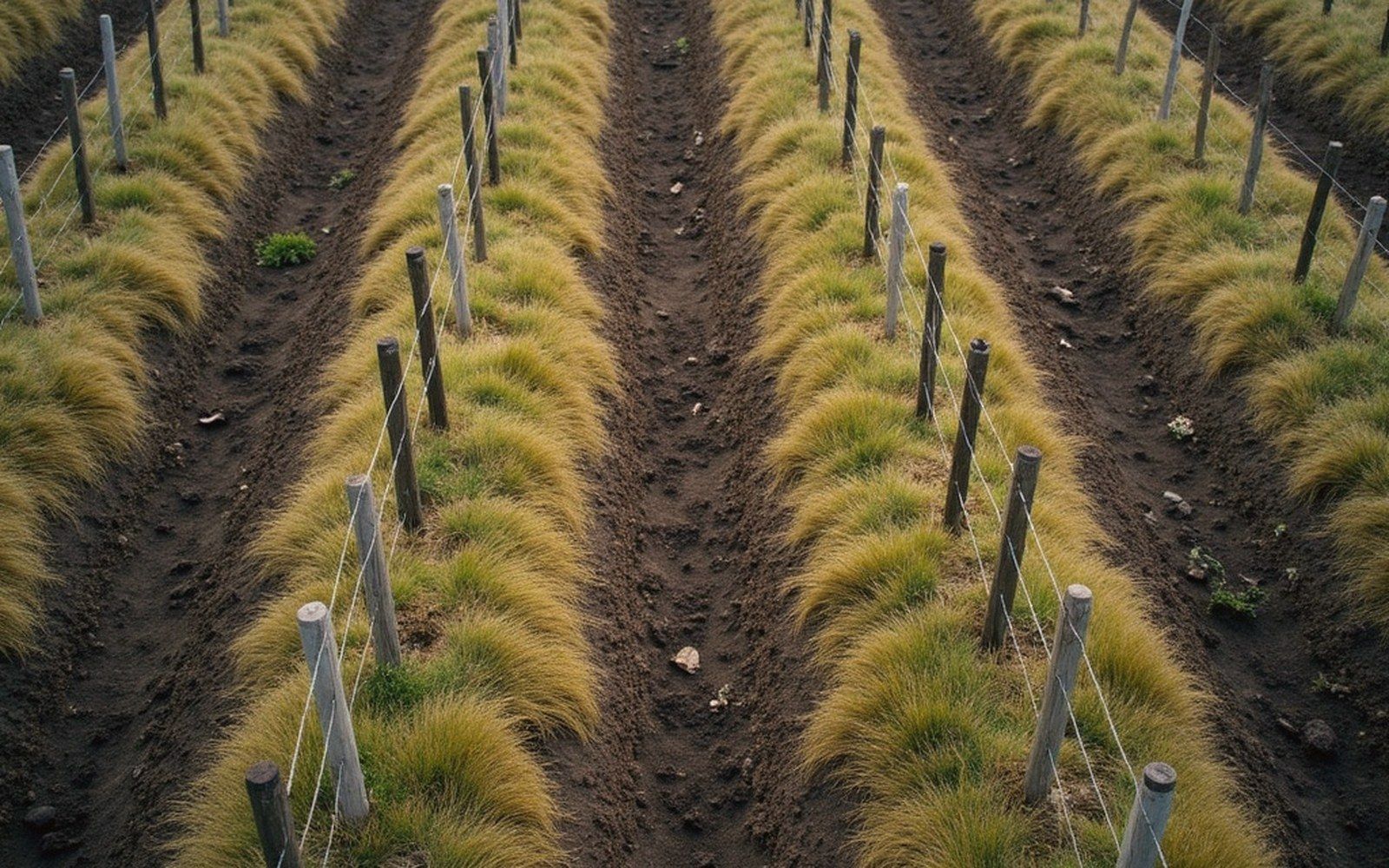
Wound into the ground at an angle, holding against everything the row does.
What It Does and Why It Has to Work
A modern apple row on dwarfing rootstocks is, in mechanical terms, a tensioned fence. The high-tensile wires run the length of the row, the trees are tied to those wires, and the fruit load in August can push that system hard. Everything depends on the strainer post at each end holding its position — and the strainer post holds its position because something underground is refusing to let it move.
That something is the screw anchor: a helical steel plate welded to a steel rod, wound into the ground at an angle that opposes the direction of pull. In a typical installation the anchor is driven in at roughly 45 degrees, heel-first away from the row, so that as the wire tension tries to drag the strainer post inward and downward, the helix is being pulled deeper and harder into undisturbed soil. The geometry is the point. A simple stake driven vertically resists by bearing against the soil at its face; a helix resists by engaging a cylinder of soil whose weight and friction far exceed what the spike alone could manage.
Plate diameter and rod length vary with soil type. A sandy or waterlogged site needs a larger helix — sometimes a second one stacked on the same rod — to find enough purchase. Firm clay can get away with less, but the installer still checks resistance with a torque reading as the anchor goes in: the torque at final depth predicts holding capacity, and an under-torqued anchor on day one will creep over years of loading. Some orchards use a calibrated torque wrench; larger contractors use a purpose-built drive head on a tractor-mounted power take-off, which gives a continuous readout.
The anchor rod breaks the soil surface at the strainer post's base and is attached either through a welded eye or by a turnbuckle that allows tension to be adjusted after installation. That adjustability matters: wires stretch slightly in the first season, posts settle, and a system that cannot be re-tensioned will sag before the first commercial crop arrives.
Screw anchors have largely replaced the older buried-log or deadman systems on new plantings. The deadman worked — a horizontal timber buried perpendicular to the pull — but it required excavation, it decayed, and it could not be re-tensioned. A steel helix screwed cleanly into place and torque-verified takes half an hour and lasts the life of the block.
- Helical plate on steel rod, driven at ~45° opposing the line of pull
- Engages a cylinder of soil, not just a surface face
- that is the load advantage
- Torque at installation predicts holding capacity; under-torqued = eventual creep
- Turnbuckle or eye fitting allows post-installation re-tensioning
Screw anchors have largely replaced the older buried-log or deadman systems on new plantings.
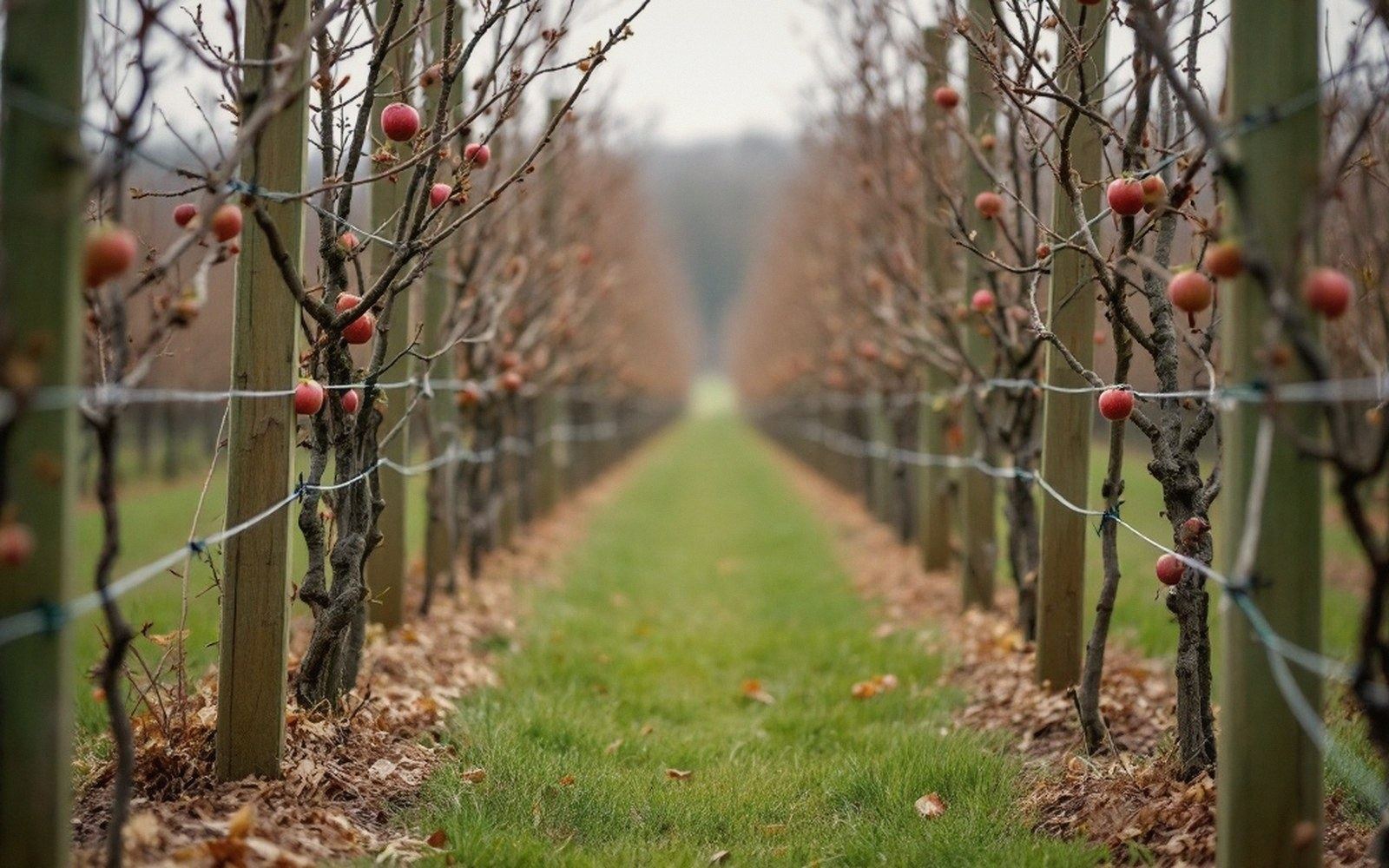
- Deadman anchor
- buried timber perpendicular to pull; effective but required excavation, decayed over time, could not be re-tensioned
- Screw anchor installed by tractor PTO drive head with torque readout; installation ~30 minutes
Filed under Structure · boydorchards.com