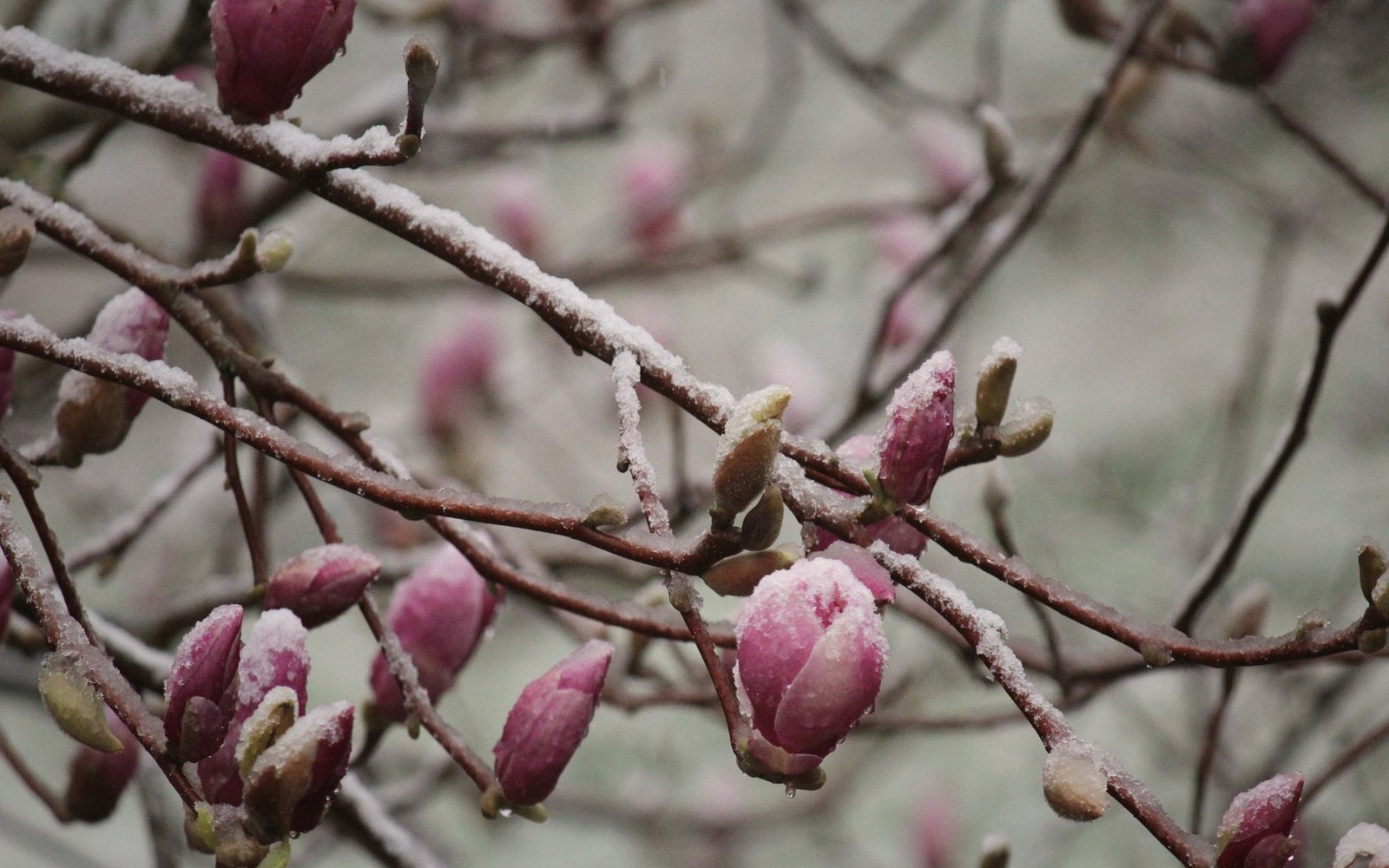
The stage at which a degree or two decides the season
Apple flowers are not all equally fragile. The risk changes by the day — sometimes by the hour — as the blossom opens, and knowing the stages is the only way to know what a night's forecast actually means.
The progression runs from green tip through half-inch green, tight cluster, pink, full pink, bloom and petal fall. At pink — the moment when colour shows but the flower hasn't opened — the critical temperature sits close to minus two degrees Celsius. That sounds like a margin. It isn't. By full bloom, when petals spread and the pistil is fully exposed, the tissue is more tender still: damage begins near minus one point five. The king bloom, the first and largest flower at the centre of each cluster, is the one that sets the biggest fruit and the one a grower is most anxious to protect.
The problem is that the calendar and the thermometer don't agree. A warm spell in early spring pulls the buds forward. The trees are at pink, fully committed, while the season is still capable of hard radiation frosts — still nights, clear skies, cold air pooling in every hollow of the block. An orchard on a slope drains cold air toward the low end. The block at the top survives; the block in the frost pocket doesn't. Site selection made at planting is the first line of defence, and it cannot be undone.
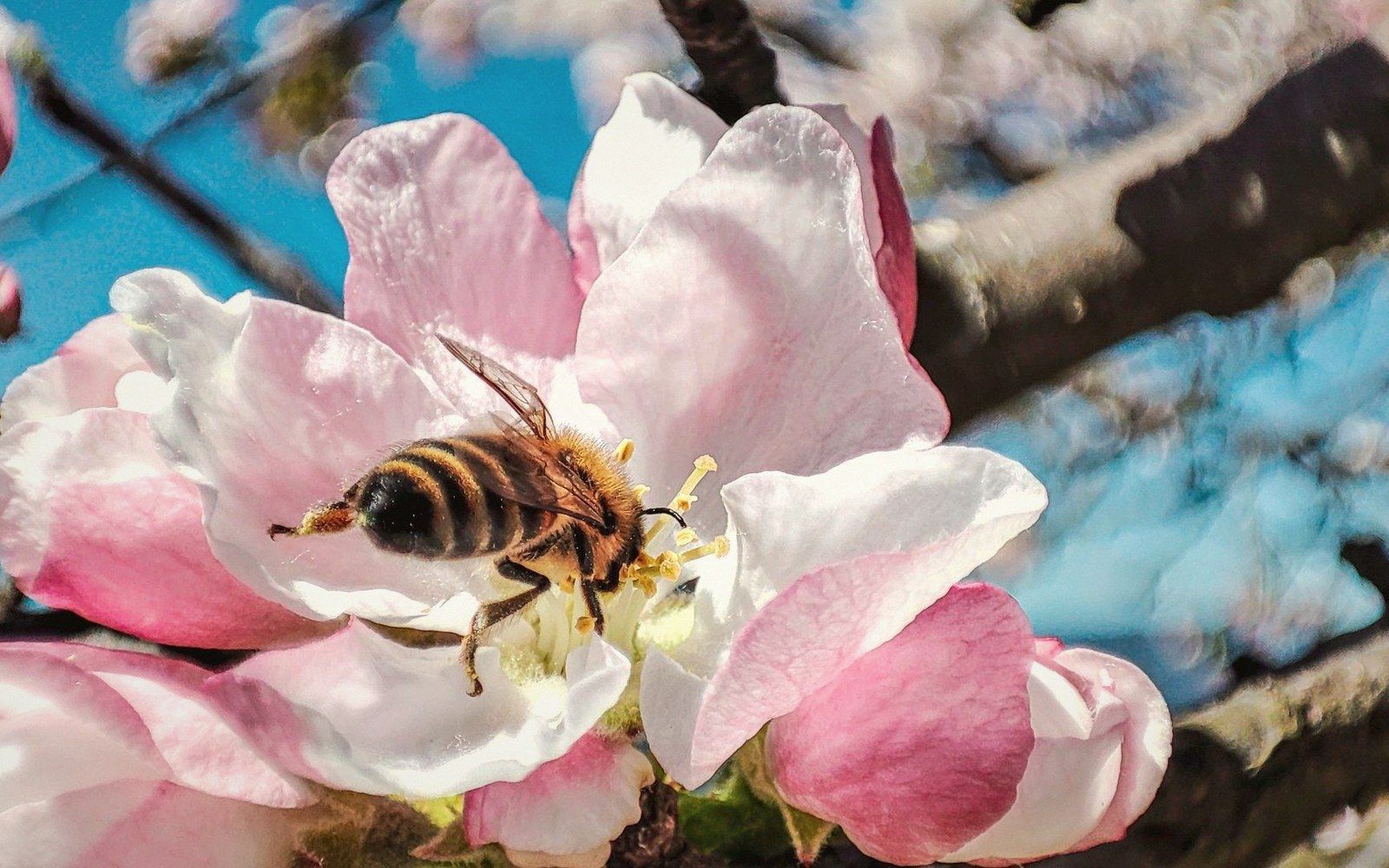
The second line is timing. Growers watch degree-day accumulations and stage the orchard by variety — early varieties cross the threshold first and face the longest exposure window. A single frost at the wrong moment can abort the entire crop of one variety while leaving another untouched fifty metres away, still a day short of pink.
When frost comes anyway, the damage shows as a brown or blackened pistil at the flower's centre. Cut open a blossom the morning after, and the small structure inside tells the whole story: green and healthy, or dead and dark. A dead pistil will not set fruit. The flower may still open, petals intact, and look like nothing happened — but the season is already over for that bloom.
There is no remediation. The only management is knowing the stages, reading the forecast and accepting that some years the frost wins.
- Tight cluster
- hardiest stage; buds still closed
- Pink (colour showing, flower closed)
- critical temperature near −2 °C
- Full bloom (petals open, pistil exposed)
- damage begins near −1.5 °C
- Post-petal fall
- fruitlet newly set; still vulnerable to sharp frost
The problem is that the calendar and the thermometer don't agree.
- Pink
- the bud stage when colour shows but petals haven't opened; the threshold moment for frost risk
- King bloom
- first flower in a cluster to open; sets the largest fruit; most valuable to protect
- Radiation frost
- frost on a still, clear night as heat radiates from the ground; the type most dangerous to orchards
- Frost pocket
- low-lying area where cold air pools; a site factor set at planting
Filed under Bloom · boydorchards.com