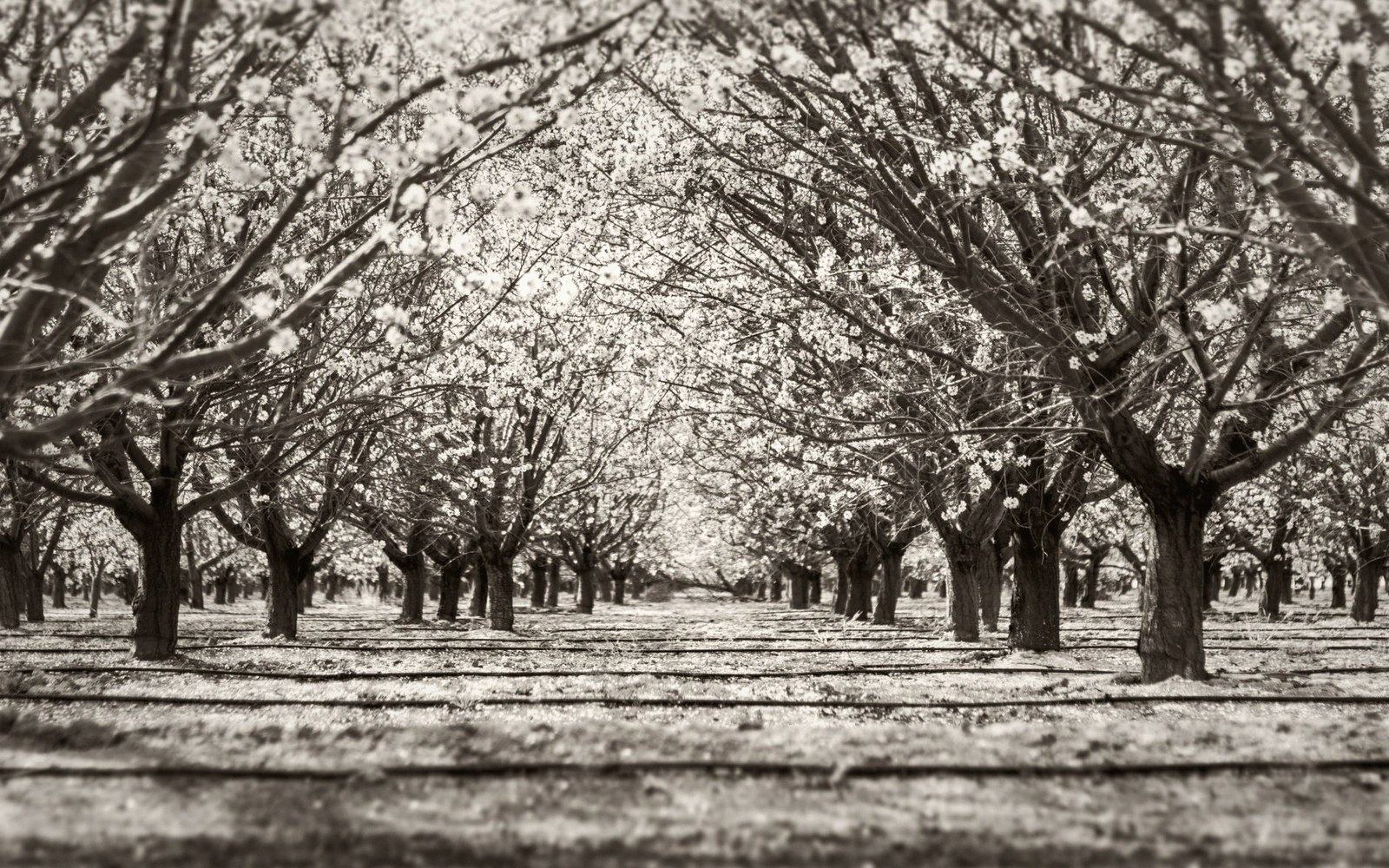
Most varieties cannot set with their own pollen. The rows planted to fix that.
Why a row cannot flower for itself
Most apple and pear varieties are self-incompatible: pollen from a flower will not fertilise an ovule on the same tree, or often any tree of the same variety. The mechanism is genetic — each variety carries recognition proteins that reject pollen sharing the same S-alleles. Plant a single-variety block and the blossom opens, the bees work it, and almost nothing sets.
The fix is a polliniser row — a different variety, flowering at the same time, whose pollen is genetically compatible with the main crop. In a commercial planting these are placed at regular intervals through the block, typically every fourth or fifth row, close enough that foraging bees move between them and the crop trees without losing interest. Some growers use crab apples, which produce pollen in abundance and are deliberately bred for the purpose; others use a second commercial variety that earns its keep at harvest too.
Timing is everything. A polliniser that flowers a week before or after the main variety is useless, however compatible its pollen might be. Varieties are grouped into flowering-time cohorts — roughly early, mid and late — and a polliniser must sit in the same cohort, or one that overlaps it. A late frost compresses all of this further: the few hours when a flower is receptive are already brief under ideal conditions, and cold narrows the window still more.
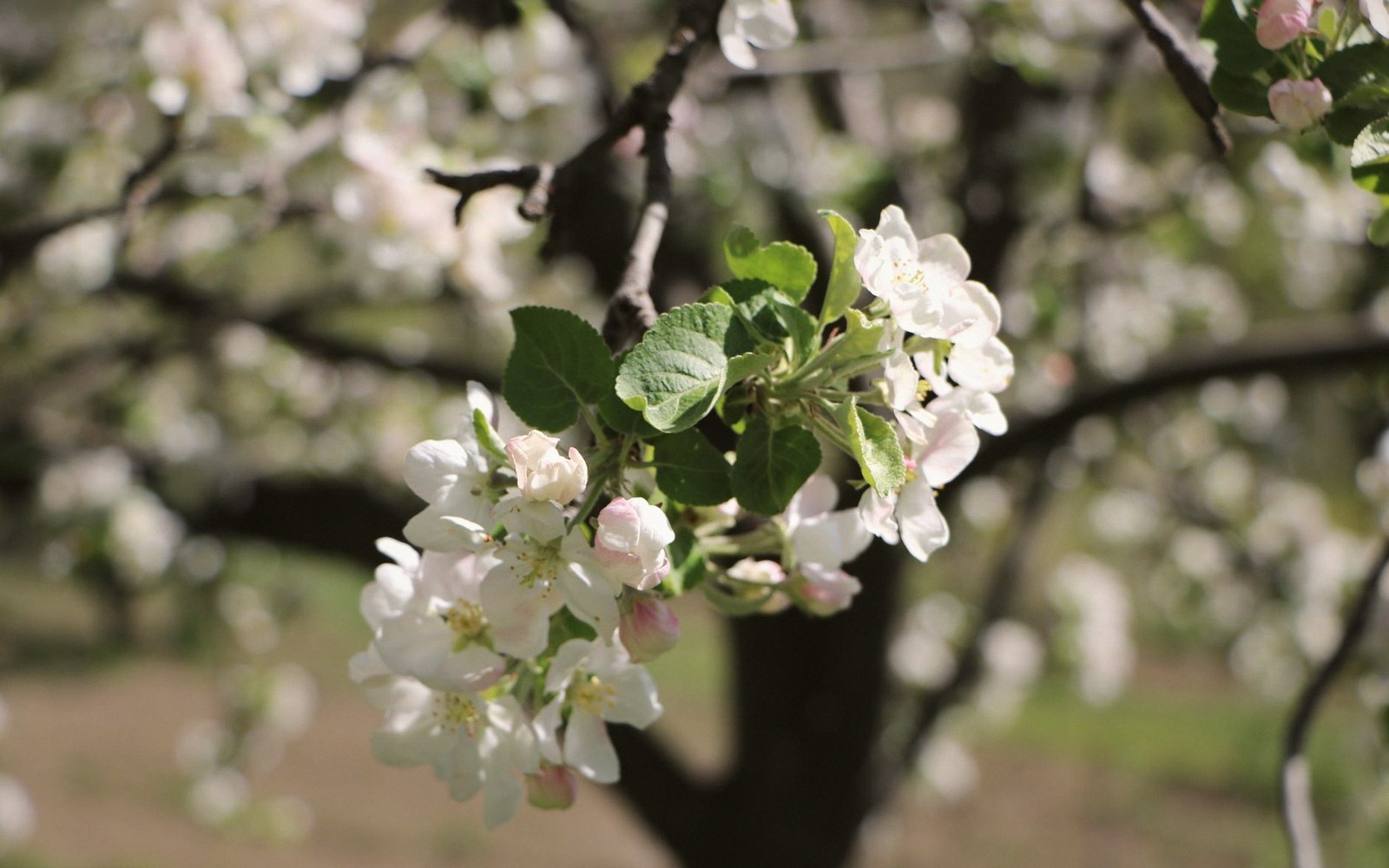
Pollen viability matters too. Some varieties are triploids — Bramley's Seedling and Jonagold are the classic cases — and triploids produce sterile or near-sterile pollen. A triploid cannot act as a polliniser for anything. A block containing a triploid therefore needs two compatible diploid varieties, so each pollinises the other as well as the triploid main crop.
Getting this wrong is not recoverable mid-season. The varieties are set at planting, the rows are in the ground, and the window for cross-pollination opens and closes in a few spring days. The polliniser row is one of the least visible elements in a modern orchard and one of the first decisions that shapes everything else.
- S-allele incompatibility
- the genetic mechanism by which a variety rejects its own pollen
- Polliniser
- the variety grown to supply compatible pollen to the main crop
- Triploid
- a variety with three chromosome sets; typically sterile pollen, cannot act as polliniser
- Diploid
- standard two-chromosome-set variety; functional pollen
A polliniser that flowers a week before or after the main variety is useless, however compatible its pollen might be.
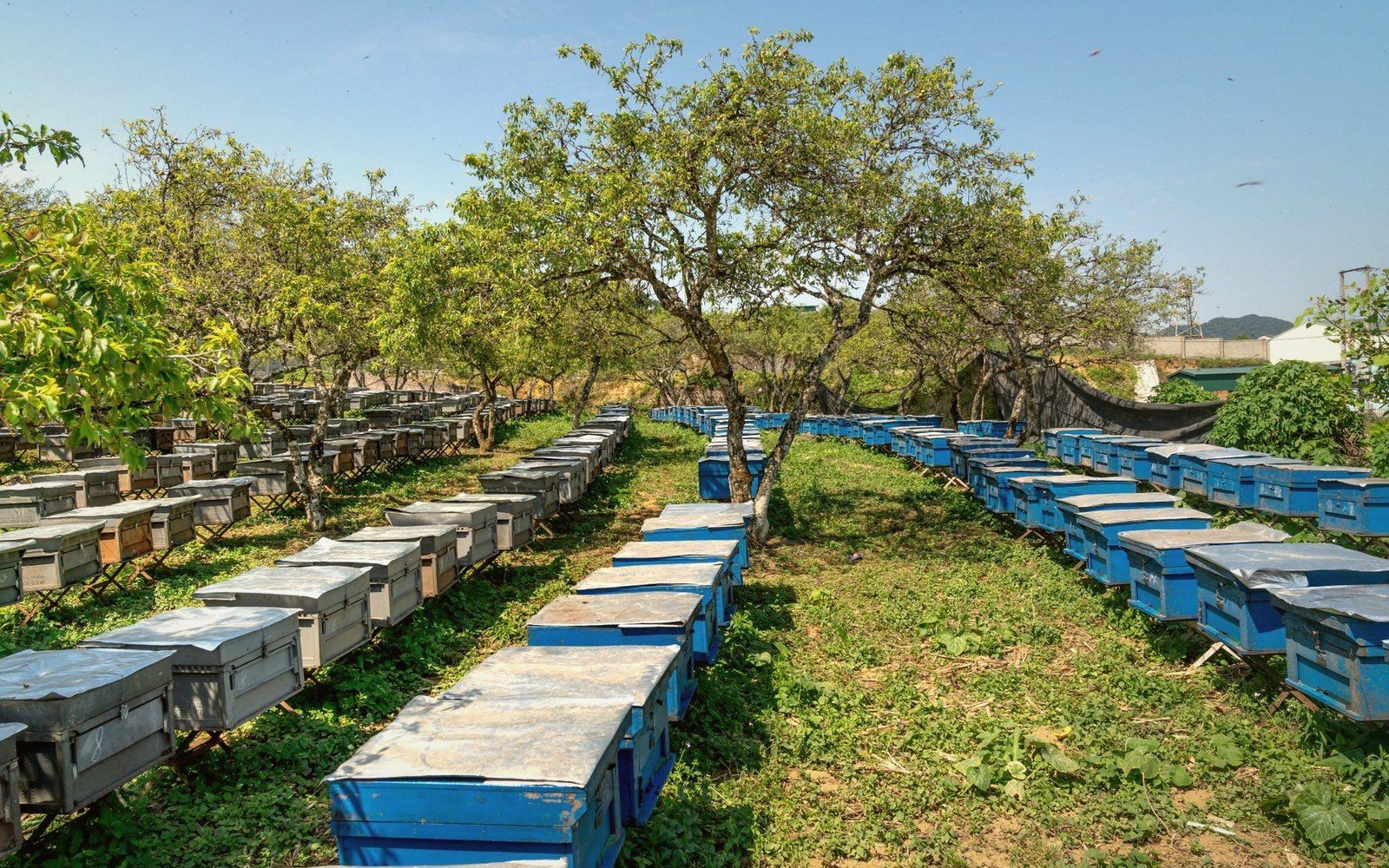
- Typical polliniser interval
- every 4th or 5th row in a modern high-density block
- Triploid examples: Bramley's Seedling, Jonagold
- require two compatible diploids alongside them
Filed under Bloom · boydorchards.com