Interstems
Three grafted pieces instead of two: when a middle section of wood is needed between rootstock and scion.
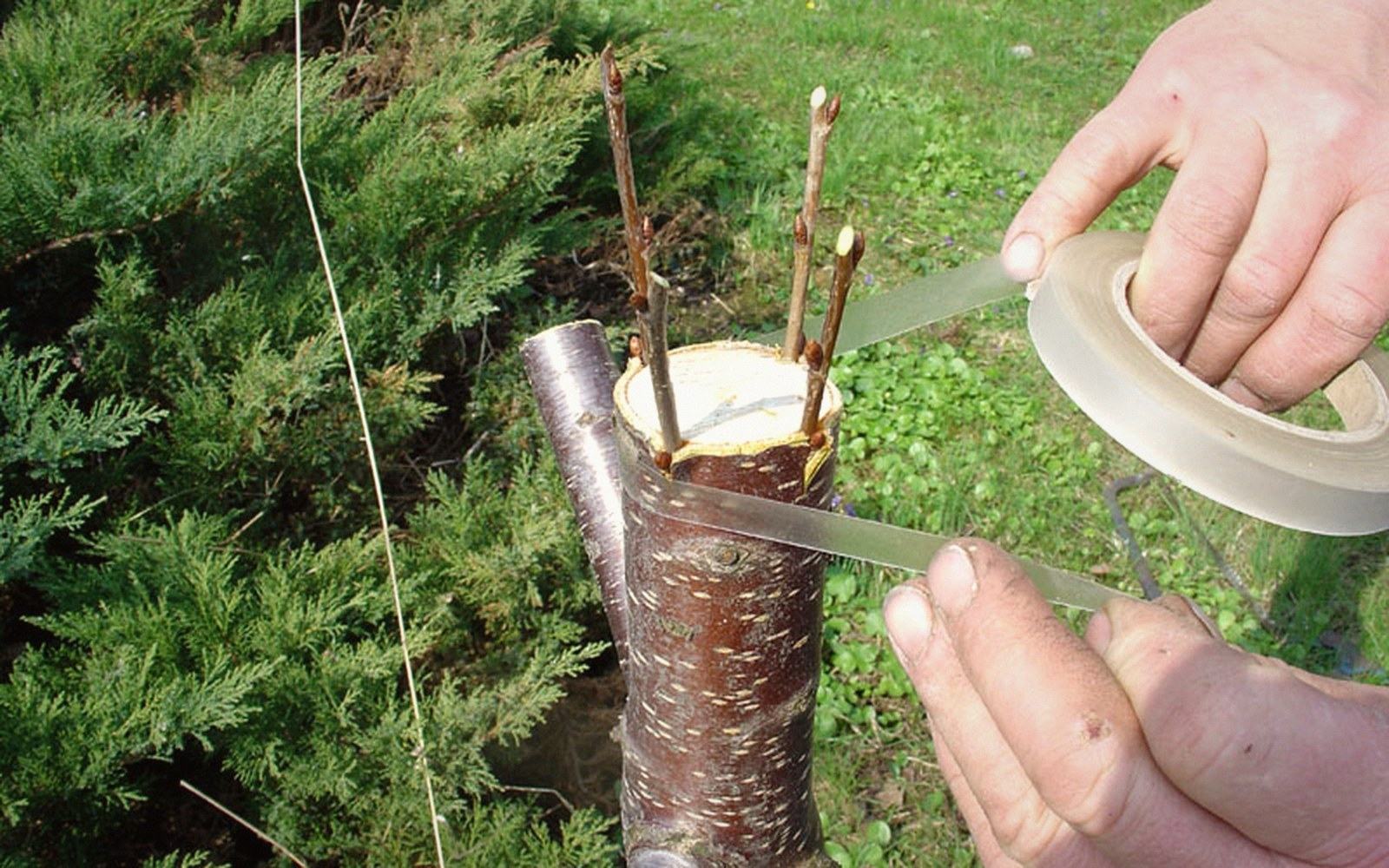
Three trees in one: a middle piece grafted between stock and scion.
When Two Won't Do
A standard grafted tree is a conversation between two plants: a rootstock sets the vigour and anchorage, and the scion provides the variety. An interstem inserts a third, a short section of a different cultivar grafted between the two. The resulting tree has a union at the base, another a foot or so above it, and then the variety climbing from there.
The most common reason to introduce an interstem is incompatibility. Certain scion varieties and certain rootstocks simply refuse to unite well — the graft forms, but the connection remains brittle, prone to breaking at the union years later under a crop load. A compatible intermediate piece bridges the chemical and structural mismatch. The interstem is chosen because it bonds reliably with both neighbours; it does not need to share any other characteristic with the finished tree.
The second use is more deliberate: borrowing the dwarfing effect of a rootstock you cannot otherwise use. Malling 9, the most widely planted dwarfing stock in modern high-density apple orchards, has poor anchorage and struggles in heavy or wet soils. Growers in those conditions sometimes use a more robust stock at the base — better rooted, better anchored — and graft a short section of M.9 above it as the interstem. The dwarfing signal travels through the M.9 interpiece and reaches the scion, moderating its vigour, while the roots below belong to a stronger, more stable variety. The tree behaves approximately as if it were on M.9 without inheriting M.9's structural weaknesses.
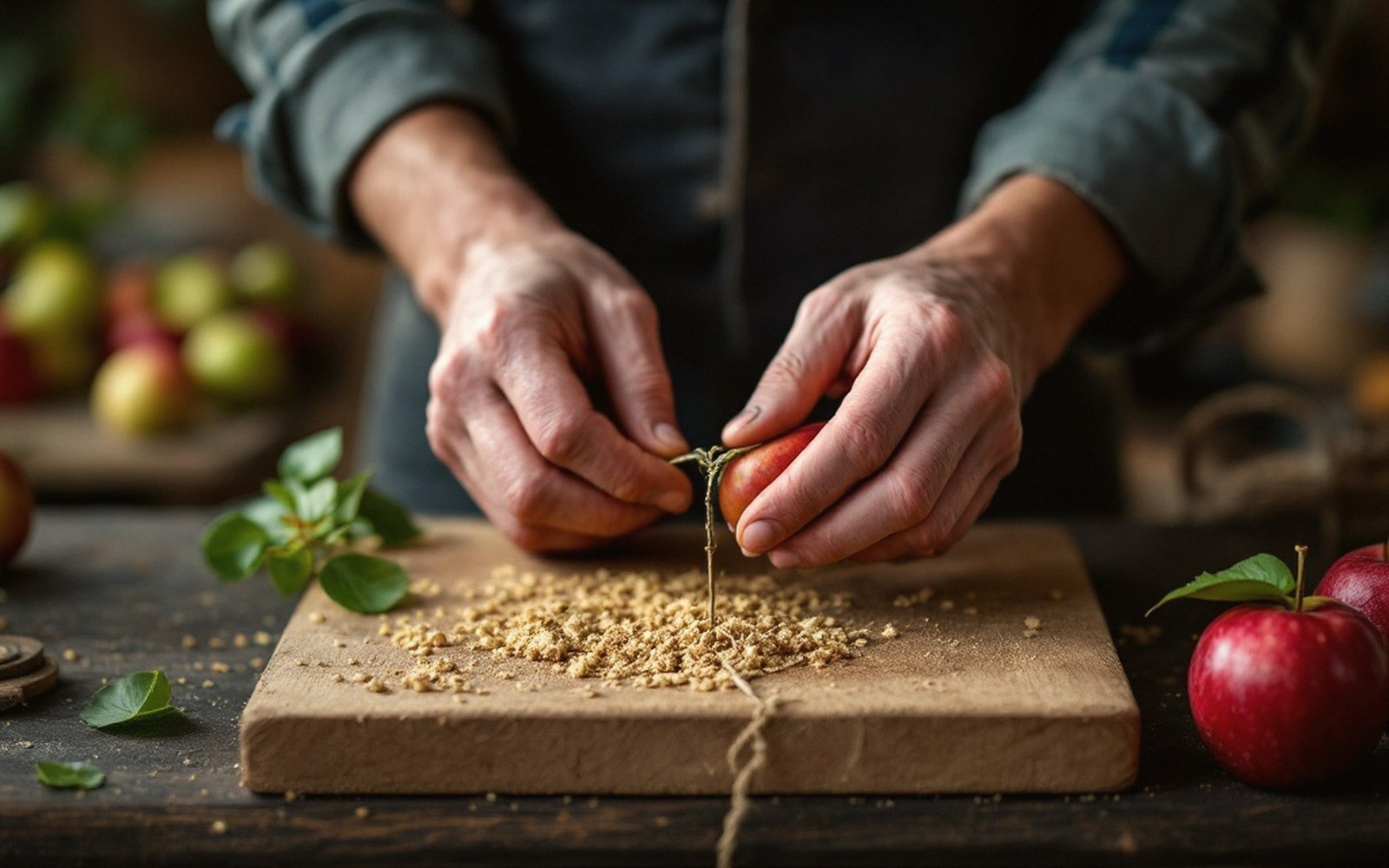
How much dwarfing the interstem delivers depends partly on its length. A longer piece of dwarfing wood suppresses the scion more than a shorter one, which gives nurseries a degree of calibration — though in practice interstem lengths are standardised and the effect is only roughly tunable. The relationship is real but not precise.
The cost is time and handling. Producing an interstem tree means two grafting operations instead of one, and the young plant must be grown on long enough that both unions consolidate before it leaves the nursery. That adds a season, which adds cost. Interstem trees are accordingly more expensive than standard grafted stock and are ordered when the alternative — a poor union or an unsuitable rootstock — costs more in the end.
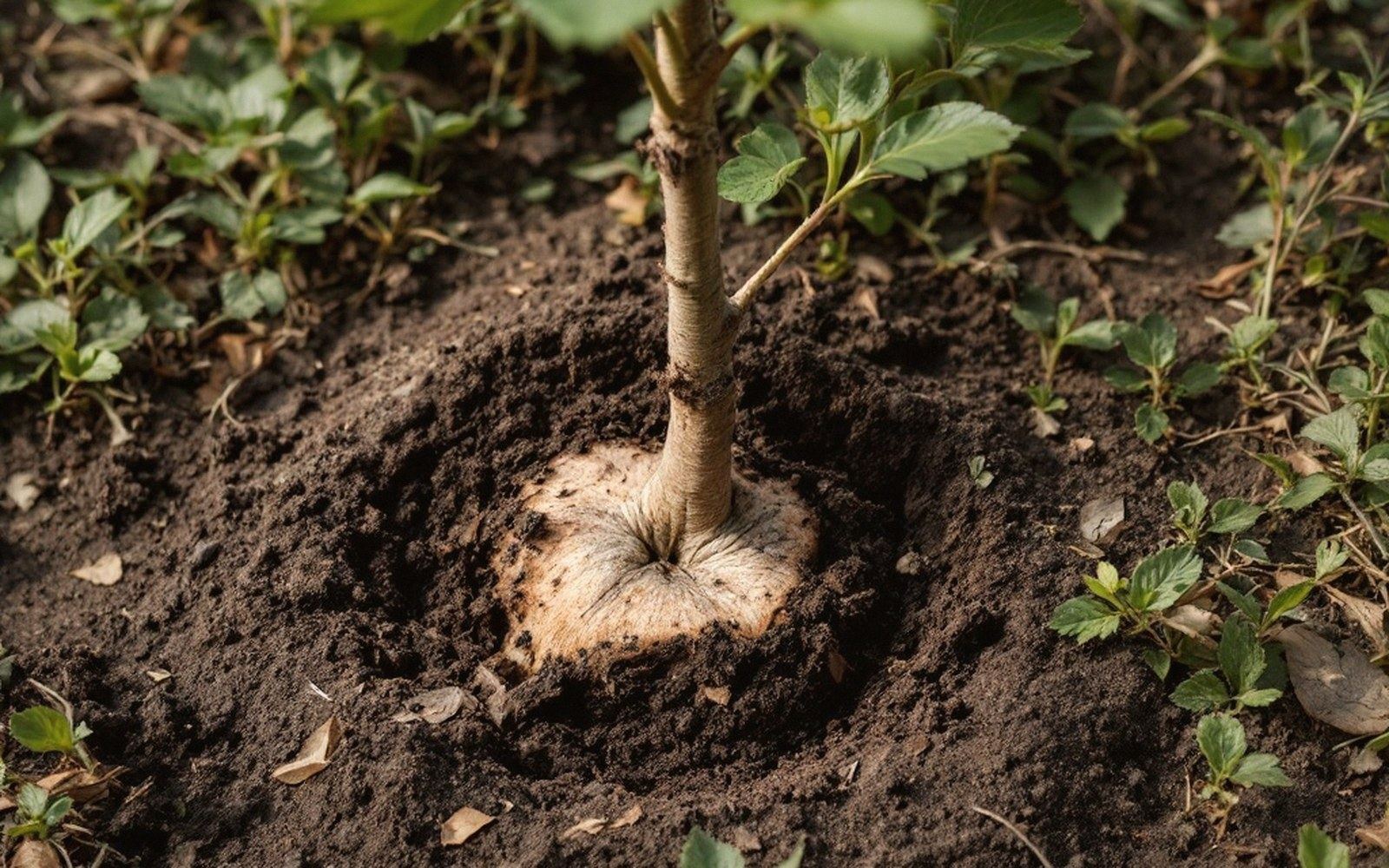
As with any union, the interstem junctions must sit above the soil line at planting. Bury either graft and the scion, or the interstem itself, may initiate its own roots, and the carefully constructed vigour balance unravels from the ground up.
- Rootstock
- the root system and base graft; sets anchorage and soil adaptation
- Interstem
- the intermediate piece; bridges incompatibility or contributes its own dwarfing effect
- Scion
- the fruiting variety; sits at the top of the stack
How much dwarfing the interstem delivers depends partly on its length.
- Interstem length and dwarfing effect
- longer piece = more suppression, but the relationship is approximate, not linear
- M.9 as interstem
- used to borrow dwarfing without accepting M.9's weak anchorage
- Two unions, both above soil
- burying either undoes the system
Filed under Union · boydorchards.com