Tying the leader
The central stem is the spine of a modern high-density planting. Everything else hangs from how well it is trained upward.
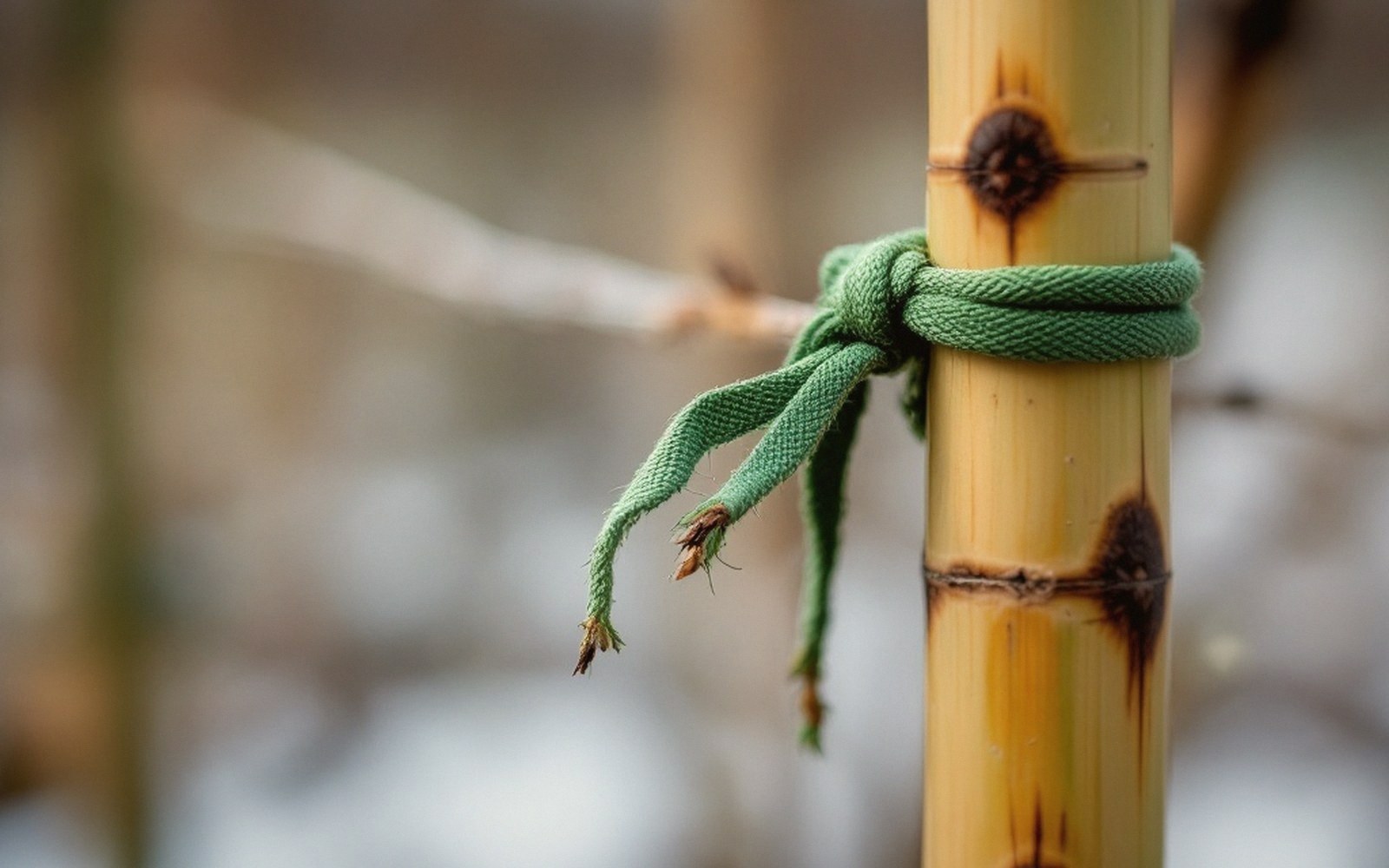
The single stem trained up, and the tie that must not girdle it.
One stem, one job
In a slender-spindle or tall-spindle system, the central leader is not decorative — it is the scaffold from which all the fruiting wood is hung. From planting year onward, the grower's job is to keep that stem moving vertically, tied to the wire or to the bamboo cane lashed to the wire, without ever letting the tie become a ligature.
The distinction matters because a stem grows. Cambium adds girth continuously through the season, and a tie placed snugly in spring can be biting into bark by August. When a tie girdles the leader it restricts the flow of photosynthates moving downward and water moving upward, weakens the stem at precisely the point where it should be strongest, and — if the constriction is bad enough — creates an entry point for canker. None of this is recoverable in a tree that is already carrying a crop.
The standard fix is simple: use a material that gives before the wood does. Flagging tape, purpose-made tree ties with a rubber buffer, or even strips of old hose all work because they either stretch or are wide enough to distribute pressure rather than concentrate it. The tie is checked at least once mid-season. A tight tie is cut and replaced; it is not loosened, because a loosened tie just becomes a rubbing tie, and a rubbing tie breaks bark.
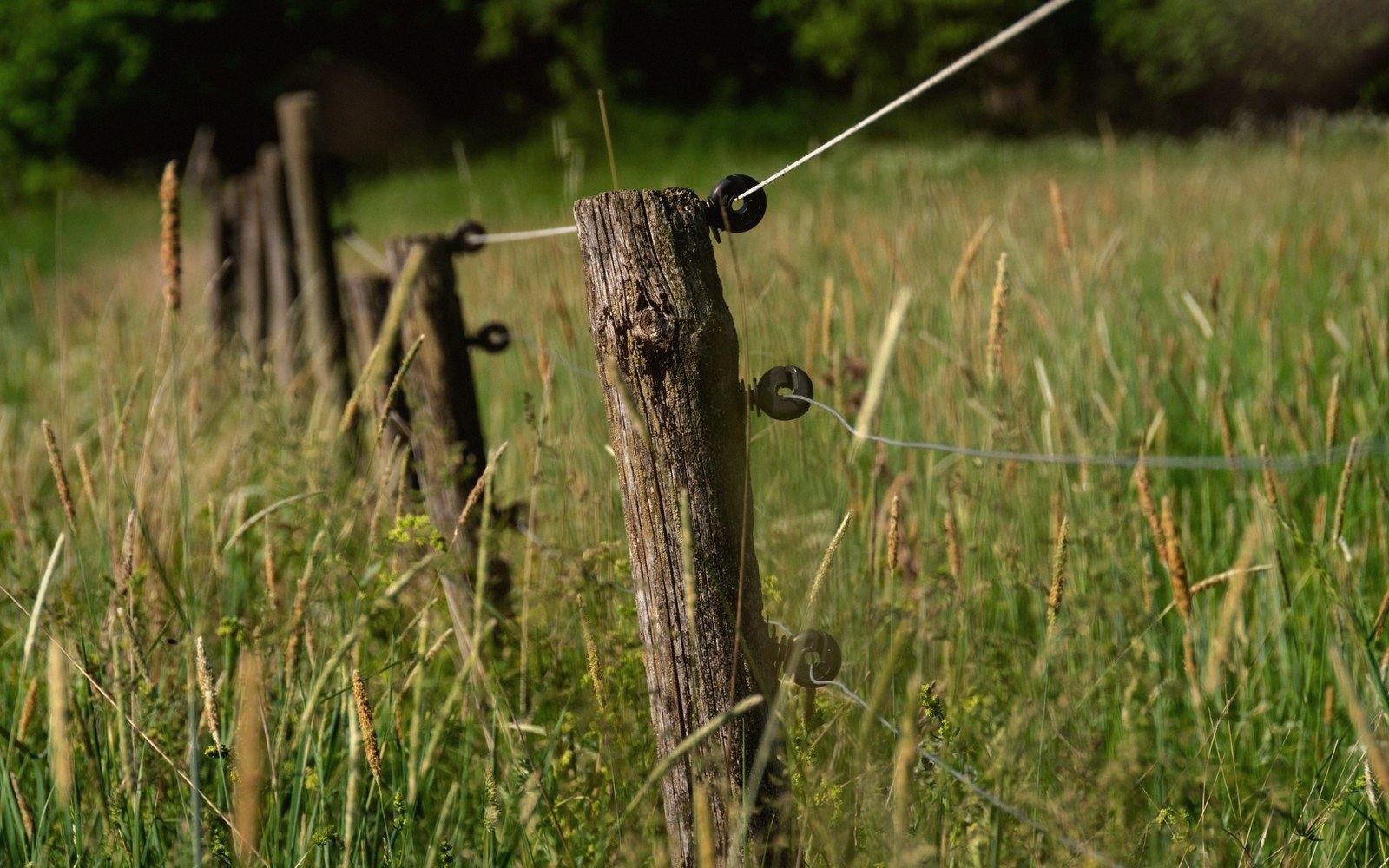
Attachment height matters too. The leader is tied at the topmost wire and at each wire below to prevent the stem swinging in wind — a swinging leader bruises its own bark and, more importantly, works the root system against its anchorage. On a dwarfing rootstock that anchorage is already limited, so lateral movement at the top translates directly to rocking at the base, and rocking at the base loosens the tree in the ground.
The tip of the leader — the current season's extension — is left free above the top wire until it has enough wood to tie without kinking. Kinking is permanent: a bend in the leader creates a weak point and often deflects the stem sideways, forcing the grower to select a lateral and retrain it upward as a replacement, losing a season and a year's structural growth.
The tie, in short, is not incidental maintenance. It is the mechanism by which the planting system delivers what it promises: a vertical, evenly-spaced axis strong enough to carry a full-cropping canopy year after year on a rootstock that was never designed to stand without support.
- Tie girdles the leader
- restricts vascular flow, invites canker entry
- Loose tie becomes a rubbing tie
- bark damage at contact point
- Tie placed on current-season extension before wood is rigid
- kinks the leader permanently
- Inadequate attachment points
- leader swings in wind, rocks anchorage at the root
The standard fix is simple: use a material that gives before the wood does.
Filed under Structure · boydorchards.com